
How a Podcast Clipping Agency Scales Video Reach
A production blueprint for turning full-length studio discussions into high-converting vertical discovery engines.
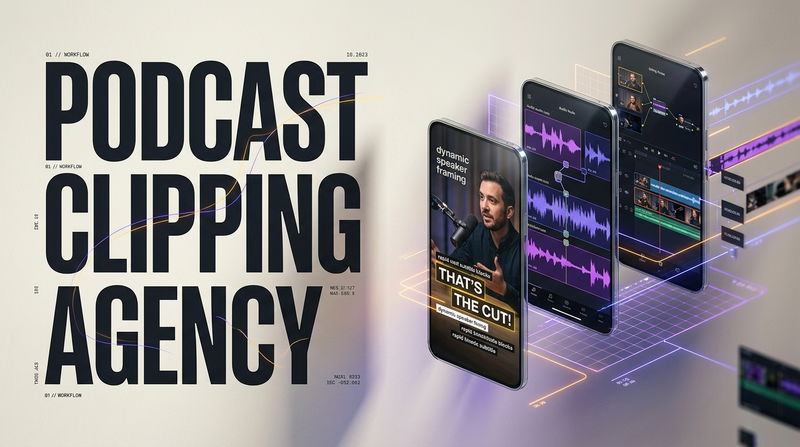

Managing an active podcast production calendar while attempting to manually extract, reframe, and distribute daily vertical video clips is an operational trap that burns out even the most disciplined creator teams. Most show hosts and marketing departments spend entire workdays booking guests, conducting detailed research, and recording multi-hour discussions, only to run out of momentum during post-production. They upload the complete episode file to hosting directories, post an unedited sixty-second audio snippet on social media, and wonder why subscriber numbers plateau.
Modern distribution channels do not reward passive audio uploads. Cold viewers scrolling on mobile devices will not stop their day to gamble an hour of their time on an unfamiliar voice. They require fast, frictionless proof of value before committing to a full catalog. Building that bridge requires treating raw recordings as source archives rather than static endpoints. Engaging a professional Podcast Clipping Agency turns this distribution problem into a predictable, high-output engine by extracting high-density insights and re-engineering them into standalone vertical assets that command attention within seconds.
Executing this process requires moving away from guesswork and adopting a structured manufacturing mindset. Here is the complete four-phase production blueprint for turning long conversations into compounding discovery assets.
Phase 1: High-Yield Dialogue Mining and Thesis Isolation
A vertical clip succeeds or fails during the review pass before an editor ever touches a cutting razor. Scrubbing through an hour of conversation hoping for random inspiration produces unfocused, wandering snippets. Editors must evaluate source recordings against three strict filtering criteria.
The Standalone Narrative Rule
A viable clip must function as an independent miniature masterclass. If understanding the core idea requires listening to the first twenty minutes of the interview, the segment is unviable. The clip must present a clear problem, provide actionable logic or analysis, and conclude decisively without leaving the listener hanging mid-thought.
The Immediate Assertion Hook
The first sentence spoken in the video must contain a complete, punchy premise. If a speaker spends ten seconds clearing their throat, agreeing with the host, or hedging their perspective, mobile viewers swipe away before the thesis lands. Look for moments where the speaker makes a bold statement, challenges popular advice, or shares an eye-opening personal realization right out of the gate.
Auditory Energy Spikes
Visual waveform charts reveal more than volume; they highlight emotional conviction. When a speaker moves from prepared talking points to spontaneous realization, their speech rhythm accelerates, vocal inflection rises, and natural emphasis emerges. These audio spikes pinpoint the most authentic, compelling moments of the entire recording.
Phase 2: Dynamic Vertical Canvas Architecture
Dropping a standard horizontal recording into a vertical canvas and filling the empty space with blurry background wallpaper is the fastest way to signal low-budget production. Mobile screens require purposeful spatial composition built from the ground up.
Stacked Conversational Split-Screens
When editing two-person interviews, avoid locking the frame onto a wide two-shot where subjects appear tiny. Build a vertical stack where the active speaker occupies the top frame and the reacting host occupies the bottom frame. Preserving real-time reactions, thoughtful nods, and natural facial responses maintains an intimate, lively atmosphere that mirrors real human conversation.
Mobile Eye-Line Placement
Position the speaker's eyes across the upper third line of the vertical frame. This layout anchors human connection immediately while keeping the center zone clear for explanatory graphics, charts, or demonstration footage. It also ensures the bottom third remains entirely open for kinetic subtitles without crowding the speaker's face.
Dynamic Keyframe Reframing
Never allow a camera angle to remain static for more than four seconds. Introducing subtle five percent punch-in cuts on key emotional words resets viewer focus and mimics a professional multi-camera studio setup. For single-camera group setups, track speakers dynamically with rapid virtual cuts rather than panning slowly across a wide table.
Phase 3: Acoustic Tightening and Kinetic Captioning
Visual composition stops the thumb, but audio clarity and readable typography keep the viewer engaged until the final frame. If the listening experience feels sluggish or text is hard to follow, audience retention drops rapidly.
Aggressive Micro-Pause Trimming
Every conversational recording contains breath resets, vocal thinking pauses, and crutch words like "um," "like," and "you know." In long-form audio, these pauses sound natural, but in short-form mobile video, a 0.4-second silence creates an immediate psychological exit point. Cut dead air aggressively. Tighten the space between phrases until the dialogue moves with crisp, continuous forward momentum.
Syllable-Synchronized Subtitles
Over seventy percent of mobile users browse video feeds with sound muted. Captions are not a secondary feature; they are the primary visual tracking element. Avoid dumping static sentences across the screen. Display small phrase clusters of one to three words that populate at the exact millisecond the syllable is voiced.
Strategic Color Emphasis
Solid white subtitles quickly blur into background video noise. Highlight crucial concepts, numbers, and core verbs in contrasting high-visibility tones like bright amber, electric cyan, or vivid lime. This gives the audience a visual summary of the speaker's logic, keeping them engaged even if their attention drifts.
Phase 4: Platform Packaging and Distribution
A polished vertical clip remains invisible without platform-tailored packaging. Every social distribution ecosystem operates with distinct algorithmic mechanics and audience expectations.
Tailoring Top-Frame Hook Banners
The graphic header banner at the top of the video sets immediate context before the viewer hears a single word. Adjust this framing according to the channel:
TikTok: Lead with conversational curiosity, relatable workplace realities, or non-obvious life lessons.
Instagram Reels: Focus on polished aesthetics, founder insights, lifestyle balance, and direct career advice.
YouTube Shorts: Highlight searchable answers, technical breakdowns, and specific how-to solutions.
LinkedIn: Emphasize operational leadership, team culture, industry shifts, and strategic business decisions.
Designing Captions for Engagement
Never give away the punchline in your written post description. If the text explains the entire answer, viewers have no reason to watch the video through to completion. Instead, use the caption to introduce an open question, share supporting bullet points, or direct engaged viewers toward the full episode archive.
Practical FAQ: Operational Execution
How many vertical clips can realistically be pulled from a one-hour show?
A focused sixty-minute podcast typically yields five to eight standout vertical clips. Avoid the temptation to turn every single sentence into a post. Prioritizing quality over sheer volume protects your brand reputation and ensures that every piece of media you release provides unmistakable value.
What is the ideal running time for an educational vertical clip?
The highest completion rates occur between thirty and forty-five seconds. This timeframe provides enough room to state a problem, explain a framework, and deliver a clear conclusion without testing viewer attention spans. Clips longer than sixty seconds require exceptional storytelling and frequent visual resets to prevent audience drop-off.
Will publishing vertical clips cannibalize full-length episode views?
The data demonstrates the exact opposite effect. Long-form video and audio archives depend on discovery engines to bring in new listeners. High-retention vertical clips act as front-of-funnel traffic drivers, exposing your ideas to tens of thousands of cold viewers who would never otherwise discover your full-length episodes.
Final Pre-Flight Audit Checklist
Before releasing any vertical video asset into your distribution pipeline, verify it against this five-point quality filter:
The Mute Comprehension Check: Does the entire clip deliver clear, actionable value with audio muted?
The First-Second Hook: Does the speaker present a compelling assertion or provocative question within the first two seconds?
The UI Safe-Zone Pass: Are all on-screen titles, subtitles, and graphics clear of platform buttons and account handles?
The Cadence Review: Have all unnatural thinking pauses, breath resets, and verbal crutches been trimmed?
The Resolution Test: Does the video deliver a satisfying, complete answer that establishes your authority on the topic?

Comments
No comments yet. Be the first to comment!