
Content Clipping Guide: Fix Stalled Video Reach
Three practical fixes to overcome mobile drop-off and turn raw recordings into active discovery.
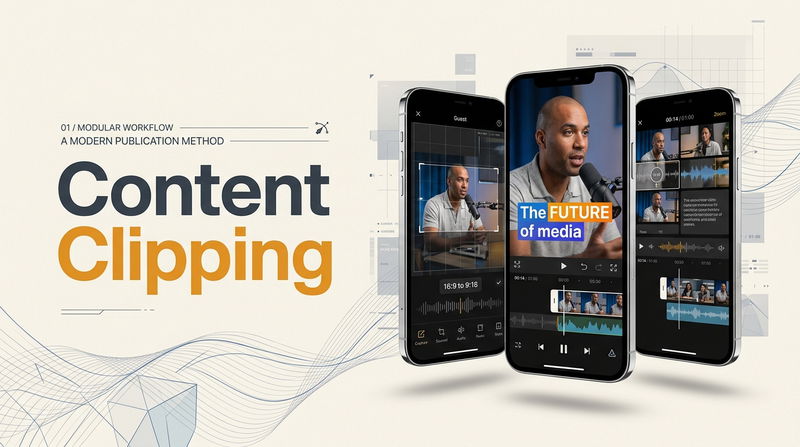

Spending hours recording in-depth conversations with brilliant industry specialists only to see your resulting short video clips stall at a few dozen views with zero subscriber growth is an exhausting frustration for media hosts and content teams. Creators dedicate substantial energy to conducting detailed background research, coordinating guest availability, and publishing full episodes across video channels and streaming directories. Yet when those lengthy sessions are sliced into video clips for mobile discovery feeds, audience retention usually drops off within the first two seconds. Teams often assume that mobile audiences simply do not care about deep subject matter, but the real obstacle is delivery friction. Viewers swipe away because standard video snippets feel disconnected, lack an immediate point, and fail to match the fast-paced viewing habits of mobile devices.
Mobile users browse feeds during brief personal breaks throughout their day. They want direct answers, fresh perspectives, and actionable insights they can apply immediately to their work or personal routines. When a video opens with a casual greeting or a rambling introduction, scrollers move on before the speaker ever reaches the core thesis.
Adopting the structured framework of editorial Content Clipping resolves this distribution bottleneck by transforming lengthy media archives into an organized library of high-impact learning assets. Rather than treating video excerpts as quick promotional teasers, this framework shapes each clip into a self-contained educational micro-story that delivers clear value right from the start.
Below is an operational briefing breaking down three common obstacles that stall short-form video reach, along with practical before-and-after advice to rebuild viewer momentum.
Obstacle 1: The Conversational Delay Barrier
The most frequent error in video repurposing is preserving the casual conversational warm-up from the original recording. When a clip begins with a host introducing a topic, welcoming a guest, or reading housekeeping announcements, mobile users leave immediately. They have no prior personal investment in the speaker and treat the delay as irrelevant background noise.
Before (What Stalls): Exporting an excerpt that opens with the speaker clearing their throat, saying "That is an interesting question," or explaining the backstory of a problem. The viewer gets zero actionable information during the opening three seconds and swipes past.
After (What Hooks): Slicing directly into the core insight on frame zero. The clip opens on the exact vocal syllable where the speaker diagnoses an operational mistake, presents an unexpected metric, or introduces a practical rule, supported by high-contrast kinetic subtitles.
The Rapid Fix: Cut all conversational pleasantries from the start of your clips. Start the edit directly on the speaker's main takeaway, giving scrollers an engaging problem before their fingers initiate a swipe.
Identifying High-Retention Spoken Hooks
To locate opening lines that keep viewers from scrolling past, review your master recordings for three specific conversational structures:
The Counterintuitive Diagnostic: A statement where the speaker explains why an accepted industry shortcut leads to hidden technical debt or wasted team hours.
The Surprising Metric: An opening line that reveals an unexpected benchmark or conversion rate, instantly challenging standard assumptions.
The Practical Framework: A concise explanation of a three-step process that solves an everyday operational headache without complex tooling.
When the opening sentence addresses a problem your target audience encounters regularly, curiosity overrides the urge to keep scrolling.
Obstacle 2: The Two-Shot Studio Letterbox
Relying on widescreen landscape crops with black letterbox bars causes instant visual fatigue on smartphone screens. Even if your conversation is brilliant, an unmoving, distant camera angle makes the host and guest look tiny and disconnected from the viewer, signaling that the clip was an unedited afterthought.
Before (What Stalls): Exporting a horizontal two-shot studio angle into a vertical frame with thick black bars at the top and bottom. Both speakers look small, their facial expressions are unreadable on a phone display, and the camera angle remains static for a minute.
After (What Hooks): Active vertical portrait reframing that cuts dynamically between tight speaker close-ups, active listener reactions, and focused zoom cutaways of relevant documentation.
The Rapid Fix: Redesign your visual layout specifically for handheld screens. Crop tightly so the speaker's eyes and facial gestures occupy the upper forty percent of the portrait canvas. Whenever a speaker delivers a critical point, cut to a dynamic single-speaker angle, then switch to the host reacting to preserve conversational intimacy.
Mobile Ergonomics and Kinetic Subtitle Design
Smartphone screens require a different visual balance than desktop monitors. To maintain an engaging layout without cluttering the canvas, apply these formatting standards:
The Upper Portrait Safe Zone: Keep the presenter's face framed comfortably within the upper third of the vertical canvas. This prevents facial expressions from being covered by native platform buttons, comments, or account navigation overlays.
Kinetic Subtitle Placement: Position subtitles in the center horizontal band of the video frame. Keep line lengths short, showing three to five words at a time so silent viewers can follow along effortlessly without feeling overwhelmed.
Secondary Color Accents: Use your brand's secondary color palette to highlight critical action words in the subtitles as they are spoken. This subtle visual styling reinforces brand recognition throughout the video without requiring an unmoving, intrusive logo watermark.
Obstacle 3: The Premature Sales Pitch
Generating thousands of views on mobile platforms provides negligible return if interested viewers have no obvious next step to explore your company's work. Traditional marketing approaches fall short here because they demand high-friction actions that smartphone users avoid.
Before (What Stalls): Ending a sixty-second clip with a speaker demanding that scrollers click an external link in an account bio or fill out a contact form. Viewers dislike leaving their current feed, resulting in tiny conversion rates.
After (What Hooks): Offering frictionless search directives that guide motivated viewers to your broader resource library on their own terms.
The Rapid Fix: Replace pushy demands with clear search guidance. Conclude your written post copy with a simple prompt: "Search our channel for Episode 42 with Sarah Jenkins to hear the full breakdown." When viewers search for your content voluntarily, they signal strong intent, and search algorithms reward your brand with higher visibility across the directory.
Structural Comparison: Ineffective Promotion vs. Strategic Editorial Clipping
Reviewing the practical differences between legacy video promotion and an intentional clipping framework shows why modern methods achieve higher audience retention:
Opening Strategy: Legacy habits lead with intro graphics, sponsor mentions, and host greetings. Strategic clipping cuts straight to a compelling thesis statement or diagnostic breakdown on frame zero.
Visual Delivery: Legacy habits rely on static two-shot studio cuts with letterboxing. Strategic clipping deploys dynamic portrait reframing, active facial safe-zone alignment, and responsive speaker switching.
Subtitle Design: Legacy habits omit on-screen text or rely on basic unformatted auto-captions. Strategic clipping features centered kinetic typography with selective color emphasis that hooks silent viewers.
Pacing Architecture: Legacy habits leave conversational pauses and administrative banter intact. Strategic clipping trims dead air and verbal hesitations to maintain rapid visual and vocal momentum.
Discovery Routing: Legacy habits push aggressive, low-converting outbound website links. Strategic clipping builds organic search curiosity by directing viewers toward named educational assets.
Frequently Asked Questions
Which types of long-form conversations produce the best short clips?
Any conversation featuring experienced practitioners discussing concrete workplace challenges produces excellent short clips. Technical deep dives, founder interviews, customer case studies, and unscripted debates all yield high-performing assets when the speaker delivers clear, actionable takeaways.
How many short-form video assets can a team extract from an hour-long recording?
A focused sixty-minute recording typically yields between four and eight high-quality standalone clips. Attempting to force fifteen or twenty clips often results in weak, fragmented soundbites that lack clear conclusions. Prioritizing high-density insights ensures that every published asset delivers genuine value to prospective followers.
What is the ideal video duration for a repurposed educational clip?
The most reliable running time sits between forty-five and seventy-five seconds. Clips under thirty seconds rarely offer enough time to explain and resolve a nuanced professional topic, while clips stretching beyond ninety seconds experience steep retention drop-offs unless the editing rhythm is exceptionally fast-paced.
Community Discussion and Actionable Prompt
Building an engaged audience through repurposed video does not require massive advertising budgets or sensationalist content tactics. It requires respecting mobile viewing habits, eliminating visual clutter, and leading with immediate utility. When you focus on solving real-world challenges for your viewers, brand recall and audience trust follow naturally.
What specific podcast episode, client discussion, or technical interview in your archive holds valuable insights that have not yet reached their full audience, and how could reframing those ideas into a focused problem-solving clip help introduce your show to a broader community? Share your experiences and operational hurdles below, and let us discuss practical ways to build your video distribution workflow.

Comments
No comments yet. Be the first to comment!