
Podcast Clipping Agency Guide: Stop Wasting Good Audio
Discover why lazy podcast repurposing fails to attract new listeners, and how an editorial clipping strategy transforms long interviews into audience growth.
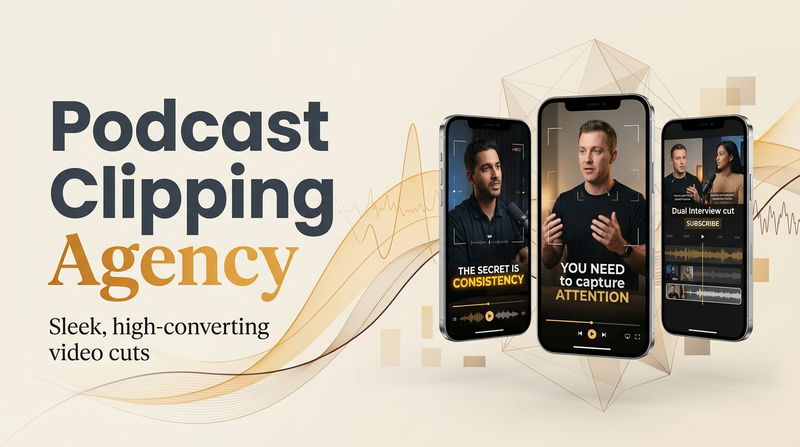

The pervasive industry assumption that simply slicing out sixty seconds of casual banter from an hour-long recording and posting it to vertical discovery feeds will automatically build a loyal podcast audience is one of the most misleading myths in digital media. Creative teams and podcast producers invest hundreds of hours securing brilliant guests, researching intricate topics, and facilitating compelling discussions. Yet when release day arrives, marketing efforts often default to automated tools that chop random video chunks, add generic subtitles, and slap a static show logo across the screen. When a mobile viewer encounters an unfamiliar conversation devoid of context, opening with polite small talk, and visually dominated by a corporate badge, they do not pause to subscribe. They swipe away before the guest reaches their primary thesis.
Treating vertical video discovery as a mechanical volume game destroys audience trust. Mobile scrollers are not looking for chopped leftovers from a show they have never heard of; they are looking for immediate insight, relatable tension, and practical solutions to everyday problems.
Adopting the editorial discipline of a specialized Podcast Clipping Agency represents a complete departure from lazy social repurposing. Rather than treating short clips like lazy advertisements, this methodology audits recorded interviews to locate their true intellectual core, reframing each insight into an autonomous micro-masterclass tailored specifically for mobile attention.
To transform recorded discussions into an ongoing engine for subscriber discovery, producers must abandon outdated repurposing habits and understand how modern editorial clipping bridges the gap between passive scrollers and dedicated listeners.
The Flawed Logic of the Unedited Snippet
The podcast industry frequently promotes the idea that any short video clip featuring an interesting speaker is inherently valuable. Because distribution algorithms favor regular video uploads, hosts convince themselves that simply maintaining an active presence is enough to trigger growth.
This assumption overlooks how mobile audiences actually evaluate video:
Immediate Cognitive Filtering: Handheld audiences navigate feeds with a defensive reflex. Because endless entertainment sits a fraction of a second away, any delay in delivering clear value leads to an instant exit.
The Inside-Joke Disconnect: Conversations that make sense to regular listeners often feel alienating to first-time viewers. Opening a clip with two colleagues laughing at an unintroduced reference signals to the viewer that they are on the outside of an exclusive club.
Visual Monotony: Leaving an edit locked on a wide, unmoving studio shot creates immediate viewer fatigue. On a compact phone screen, facial vulnerability and expressive eyes drive emotional connection, not studio furniture.
True podcast discovery is never accidental. It is the result of isolating a profound spoken thought, eliminating conversational friction, and presenting that idea with clean visual clarity so the viewer experiences the value of your show within the opening three seconds.
What Fails vs. What Works: Four Foundational Shifts
Examining the operational contrast between outdated promotional habits and an intentional clipping framework illustrates why a strategic shift is necessary:
1. Conversational Pleasantries vs. The Zero-Delay Thesis
What Fails: Opening a clip with the host asking how the guest is doing, followed by the guest saying, "That is a great question, let me think about how to frame this." The viewer receives zero educational value during the first five seconds and leaves immediately.
What Works: Slicing directly into the primary intellectual breakthrough on frame zero. The video begins on the exact vocal syllable where the speaker introduces a counterintuitive insight, presents a surprising data point, or identifies a common workplace error.
2. Static Two-Shot Letterboxing vs. Dynamic Portrait Framing
What Fails: Exporting widescreen horizontal studio footage with thick black letterbox bars at the top and bottom. Both speakers look tiny, their facial gestures are impossible to read on a mobile display, and the canvas remains static for a minute.
What Works: Active vertical portrait reframing. Editors crop tightly so the speaker's eyes and expressions occupy the upper portion of the canvas, cutting rhythmically between the guest speaking and the host listening to preserve the natural energy of the conversation.
3. Basic Subtitle Dumps vs. Kinetic Typography With Color Accents
What Fails: Relying on generic, auto-generated captions that drop giant walls of text across the bottom of the screen. Muffled dialogue and cluttered text blocks create eye fatigue for the seventy percent of mobile users who browse without sound.
What Works: Centered kinetic subtitles styled in short, readable clusters of three to five words. Applying secondary brand colors to highlight actionable terms allows silent scrollers to grasp the core takeaway before deciding to activate their audio.
4. Forcing Bio Links vs. Cultivating Intentional Search
What Fails: Concluding every clip with an aggressive voiceover or title card ordering viewers to click the link in the account bio to listen to the full episode. Mobile users dislike abandoning their active feeds, leading to abysmal click-through rates.
What Works: Curiosity-driven search guidance. By packaging the clip as part of a recognized educational series and providing an exact episode title in the caption, interested viewers search for the full discussion on their own terms.
Structural Breakdown: Outdated Snippets vs. Modern Editorial Clipping
Reviewing the practical differences between legacy podcast promotion and an intentional clipping framework shows why modern methods build sustainable subscriber loyalty:
Editorial Objective:
Outdated Snippets: Aim to generate superficial impressions by relying on automated cuts and volume spikes.
Modern Editorial Clipping: Aims to attract qualified long-form listeners through deep problem-solving and emotional resonance.
Opening Pacing:
Outdated Snippets: Retain introductory banter, audio pauses, and administrative pleasantries.
Modern Editorial Clipping: Cut directly to an engaging diagnostic statement or unexpected metric on frame zero.
Visual Presentation:
Outdated Snippets: Rely on distant widescreen crops, massive letterbox margins, or unmoving cameras.
Modern Editorial Clipping: Deploy dynamic portrait reframing, active facial safe zones, and focused visual cutaways.
Silent Readability:
Outdated Snippets: Omit subtitles entirely or use cluttered, unformatted text blocks.
Modern Editorial Clipping: Feature centered, high-contrast kinetic typography with selective color emphasis.
Audience Path:
Outdated Snippets: Demand friction-heavy bio clicks that disrupt the browsing experience.
Modern Editorial Clipping: Build organic search curiosity by guiding viewers toward named episodes across streaming platforms.
The Three Pillars of Narrative Podcast Clipping
To transform recorded interviews into an ongoing subscriber engine, production teams must master three foundational disciplines:
1. The Standalone Narrative Arc
Every vertical clip extracted from a long conversation must function as an independent piece of thinking. If a viewer needs to have heard the preceding twenty minutes of dialogue to understand the point, the clip will fail on discovery feeds. The excerpt must introduce its own friction, analyze the cause, and deliver a clean takeaway within its own forty-five to seventy-five second window.
2. Mobile Visual Ergonomics
Smartphone screens require a completely different visual balance than desktop monitors. Keep the speaker's eye line framed safely within the upper third of the vertical canvas, far away from native platform buttons, comment boxes, and account handles. When a guest mentions a specific workflow diagram or metric, cut directly to a zoomed crop of that data point for two seconds rather than leaving the camera locked on an unmoving shot.
3. High-Intent Discovery Routing
The highest-converting subscriber is someone who chooses to seek out your show voluntarily. In the written copy accompanying your video, summarize the core takeaway in two clear sentences and provide an exact search query: "Search your preferred podcast app for Episode 38 with Marcus Reed to hear the complete discussion." Guiding listeners to search by name sends powerful demand signals to podcast directories, lifting your show across algorithmic recommendation lists.
Frequently Asked Questions
Can an interview show build an audience without featuring celebrity guests?
Yes. Audiences subscribe to podcasts that solve real problems and offer unique perspectives, regardless of the guest's fame. When an unrecognized practitioner shares a practical insight that helps a listener avoid an expensive mistake or streamline their daily workflow, that viewer associates your show with genuine competence. Highlighting practical utility always outperforms relying purely on recognizable names.
How many short-form video assets should be extracted from an hour-long podcast?
A focused sixty-minute recording typically yields between four and eight strong standalone insights. Attempting to force ten or fifteen clips often results in weak, fragmented snippets that lack complete narrative resolutions. Focusing on high-density moments ensures that every published video delivers genuine value to prospective followers.
What is the ideal video duration for a repurposed podcast excerpt?
The most reliable running time sits between forty-five and seventy-five seconds. Clips under thirty seconds rarely offer enough time to explain and resolve a nuanced professional topic, while clips stretching beyond ninety seconds experience steep retention drop-offs unless the editing rhythm is exceptionally dynamic.
The Future of Long-Form Audio Discovery
The era when a podcast could grow simply by publishing to RSS feeds and hoping for algorithmic placement has come to a close. Modern audio discovery takes place across fast-moving vertical video feeds where listeners sample ideas before committing an hour of their attention.
Podcasters who build durable, engaged audiences recognize that their long recordings are not single-use media files. They are deep knowledge vaults waiting to be translated into mobile-native formats.
By stepping away from lazy video chops and adopting a structured, editorial clipping framework, you respect your audience's time while showcasing the true depth of your show. When you lead with immediate educational value and clean visual storytelling, casual feed scrollers naturally transform into loyal, long-term subscribers.

Comments
No comments yet. Be the first to comment!