
How Brands Use Short-Form Video to Stay Visible
A practical look at turning long-form ideas into clips that build reach, trust, and consistency
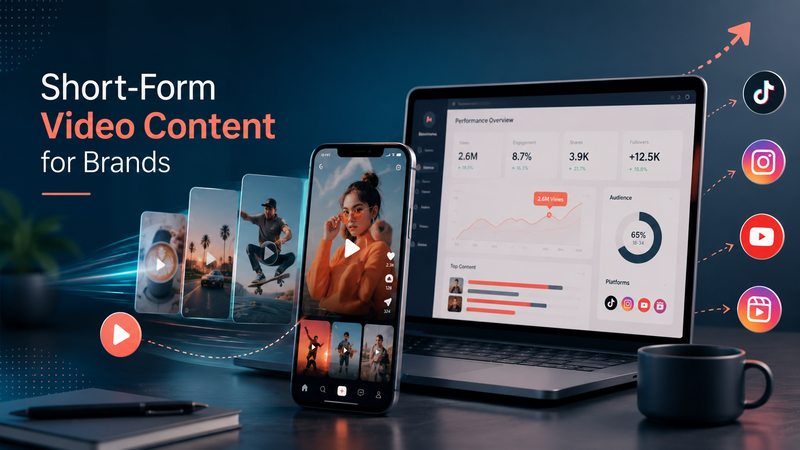

Brands are producing more content than ever, but a lot of that content does not travel far enough. A company might record a webinar, publish a podcast, film a product walkthrough, capture a customer conversation, or shoot a founder-led video, then use that asset once before moving on to the next project. The content may be useful, but its impact is limited if it only appears in one place.
Short-form video gives brands a way to change that. Instead of treating every long-form asset as a single piece of content, brands can break down the strongest ideas into shorter clips that are easier to watch and easier to share. A 40-minute webinar can become a set of helpful clips. A founder interview can become several thought leadership posts. A product demo can become a series of short explanations for prospects who are not ready to watch the full version.
This is why short-form video content has become a serious part of brand marketing. It helps companies show up more often without having to start from scratch every time. More importantly, it helps audiences understand the brand through small, clear moments that fit how people actually consume content today.
Why Short-Form Video Works for Modern Brands
Most people do not discover a brand by sitting down with its longest piece of content first. They usually encounter the brand through something smaller. It may be a social clip, a short founder quote, a product tip, a customer story, or a quick answer to a question they already had.
That smaller moment can create interest. It can make someone pause, think, click, follow, save, or look deeper. Short-form video works because it lowers the amount of effort required from the viewer. It gives them one idea instead of asking them to commit to a full presentation.
For brands, this matters because attention is fragmented. Audiences are spread across LinkedIn, Instagram, TikTok, YouTube Shorts, email, communities, and search. A brand that only publishes long-form content may still be doing good work, but many people will never see the best parts of it.
Short-form video helps brands:
Make complex ideas easier to understand
Reach people who do not already follow them
Repurpose long-form assets into multiple clips
Support campaigns with more content touchpoints
Humanise founders, teams, experts, and customers
Build familiarity through regular posting
Test which messages actually connect with the audience
Keep content active across several platforms
The value is not only in creating more content. The value is in making existing ideas easier to discover.
The Problem With One-Time Content
Many brands treat content as a one-time event. A webinar is promoted, hosted, uploaded, and then forgotten. A podcast episode is published once and then replaced by the next episode. A product demo is recorded for one campaign but rarely used again. A customer interview may sit inside a folder after the case study is complete.
This creates waste. Not because the content lacks value, but because the best moments are never separated and distributed properly.
A webinar might contain five strong ideas that could each become a short-form clip. A podcast might include a clear answer to a common customer problem. A product demo might show a feature in a way that is easier to understand than a written explanation. A customer story might include a line that explains the value of the brand better than any marketing copy.
When those moments stay buried inside long recordings, the brand misses an opportunity.
Short-form video solves this by turning one source asset into several useful pieces of content. It helps brands get more value from the work they have already done.
What Short-Form Video Content for Brands Actually Includes
Short-form video content for brands is not limited to trendy social posts. It includes any short video asset that communicates one focused idea clearly and quickly.
This can include:
Webinar highlights
Podcast takeaways
Founder insights
Product feature clips
Customer story moments
Event recap clips
Expert opinion videos
Sales enablement snippets
Educational explainers
Behind-the-scenes content
Team culture videos
Case study clips
Frequently asked question videos
The strongest brand clips usually have a clear purpose. They do not feel like random leftovers from a longer recording. They feel like complete pieces of content, even if they came from a larger asset.
A good short-form clip can explain a problem, introduce a product, build trust, show proof, answer an objection, or make a brand feel more human. It does not need to do everything at once. It only needs to do one thing well.
What Makes a Brand Clip Worth Watching
A strong short-form brand video usually starts with clarity. The viewer should quickly understand what the clip is about and why it matters. If the opening is slow or vague, people are likely to move on before the main idea arrives.
A good brand clip usually includes:
A strong opening that gets to the point
One clear message
Enough context for new viewers
Clean pacing
Captions that are easy to read
A natural ending
A tone that matches the brand
A reason for the viewer to keep watching
The best clips are not always the most dramatic ones. For brands, useful and specific moments often perform better than broad promotional messages. A clear answer to a real customer question can be more valuable than a polished slogan. A short founder insight can feel more memorable than a generic campaign line.
For example, a weak clip might begin with a long introduction from a webinar. A stronger version starts with the actual insight: “Most brands do not lose attention because their ideas are bad. They lose attention because those ideas are not packaged in a format people want to consume.”
That kind of opening gives the viewer something to think about immediately.
Why Brand Voice Matters in Short-Form Video
Short-form video should not make every company sound the same. A SaaS brand, agency, coaching business, ecommerce company, fintech startup, healthcare brand, and professional services firm all need different styles of communication.
Some brands need to sound calm and expert-led. Others need to sound direct and founder-driven. Some need a polished corporate tone. Others work better with a more conversational style.
The purpose of short-form video is not to force a brand into a social media template. It is to make the brand’s existing voice easier to consume.
That means the content should reflect:
How the brand speaks
What the audience expects
What level of polish is appropriate
Which people best represent the company
What topics the brand wants to be known for
How much education should come before promotion
What type of content builds trust rather than noise
Strong brand clips feel useful first. Promotion may be part of the strategy, but the clip should not feel like an ad disguised as content. It should teach, explain, clarify, prove, or show something that matters to the audience.
How Short-Form Video Supports Different Marketing Goals
Short-form video is often treated as awareness content, but brands can use it across the entire customer journey.
At the awareness stage, short clips help people discover the brand’s ideas. These clips may focus on common problems, industry opinions, quick explanations, or founder-led points of view.
At the consideration stage, short clips can help people understand how the brand solves specific problems. These may include product demos, customer story clips, feature explanations, or expert answers.
At the decision stage, short clips can support trust. These may include testimonials, proof points, objection-handling clips, case study moments, or behind-the-scenes content that makes the company feel more credible.
This makes short-form video useful beyond the social feed. A sales team can use clips in follow-ups. A marketing team can use them in email campaigns. A paid media team can use them in retargeting. A content team can use them to drive attention back to long-form assets.
A short video can explain a point faster than a long paragraph. It can also show tone, confidence, and personality in a way that static content often cannot.
How Clipping Turns Existing Content Into a Publishing System
Clipping is one of the most practical ways to create short-form video content because it starts with assets the brand already has. Instead of planning a new shoot every week, the team can review existing content and turn the strongest moments into clips.
A good clipping workflow usually includes:
Reviewing long-form content
Identifying useful standalone moments
Cutting each clip around one clear idea
Removing slow sections and filler
Adding captions for clarity
Formatting clips for different platforms
Creating variations when needed
Organising clips into a publishing schedule
For brands that already record webinars, podcasts, interviews, demos, or customer stories, this creates a much more efficient content system. A single recording can become several posts, and each post can support a different part of the customer journey.
For teams that want a more consistent approach, Short-Form Video Content for Brands can help turn long-form ideas into clips that are easier to watch, share, and distribute across the platforms where audiences already spend time.
Why Consistency Matters More Than Chasing Virality
Many brands think of short-form video in terms of viral success. A breakout clip can help, but it should not be the foundation of the strategy. Most brands build stronger results by posting consistently and learning from audience response.
Consistency helps people remember the brand. When a company shows up regularly with useful clips, the audience starts to understand what the brand talks about, what it believes, and why its perspective matters.
Consistency also gives the team better data. Instead of guessing which messages work, the brand can see what earns attention.
A regular short-form video system can help brands learn:
Which topics interest the audience most
Which experts or team members connect well on camera
Which product messages are easiest to understand
Which clips drive profile visits or conversations
Which platforms deserve more attention
Which ideas should become larger campaigns
This makes short-form video more than content output. It becomes a feedback system that helps the brand improve its messaging.
Common Mistakes Brands Make With Short-Form Video
Many brands try short-form video but do not get the results they expected. Usually, the issue is not the format itself. The issue is how the content is selected, edited, and distributed.
Common mistakes include:
Starting clips with too much setup
Choosing moments that need too much context
Making every clip sound promotional
Using captions that are hard to read
Cutting the clip before the idea is complete
Posting without a clear message strategy
Ignoring platform differences
Repeating the same format too often
Publishing inconsistently
Treating short-form clips as filler content
These mistakes can make strong source material feel weak. A thoughtful webinar can become a forgettable clip if the edit starts in the wrong place. A founder insight can lose its value if the clip removes the context. A customer story can feel flat if the strongest line is buried.
Short-form content needs to be shaped for the viewer, not just cut from the original asset.
What Brands Should Look for in a Short-Form Content Partner
A good short-form content partner should understand more than editing. They should understand brand messaging, audience behaviour, content repurposing, and distribution.
Brands should look for a partner that can:
Identify strong moments inside long-form content
Preserve the brand’s tone and credibility
Edit clips for pacing and clarity
Add clean captions
Format content for different platforms
Build a consistent publishing pipeline
Support campaign goals
Avoid generic templates
Understand the difference between education and promotion
The right partner should make the brand easier to understand. They should not simply create more content for the sake of volume. The goal is to turn valuable ideas into clips that reach the right people in the right format.
Final Thoughts
Short-form video has become one of the most practical ways for brands to improve visibility. It helps companies turn long-form material into smaller, clearer, and more shareable assets that can move across different platforms.
For brands that already create webinars, podcasts, founder videos, product demos, interviews, customer stories, or events, short-form video is not just another marketing task. It is a way to get more value from work that has already been done.
The strongest brands are not simply posting more clips. They are building systems that make their best ideas easier to find, easier to understand, and easier to remember.
When short-form video is clear, consistent, and connected to a larger strategy, it becomes more than a format. It becomes a practical engine for visibility, trust, and growth.

Comments
No comments yet. Be the first to comment!