Podcast Clipping Agency: How to Make Every Episode Work Harder
A practical look at how podcast teams can turn one long episode into short-form clips that build discovery, trust, and consistent visibility.
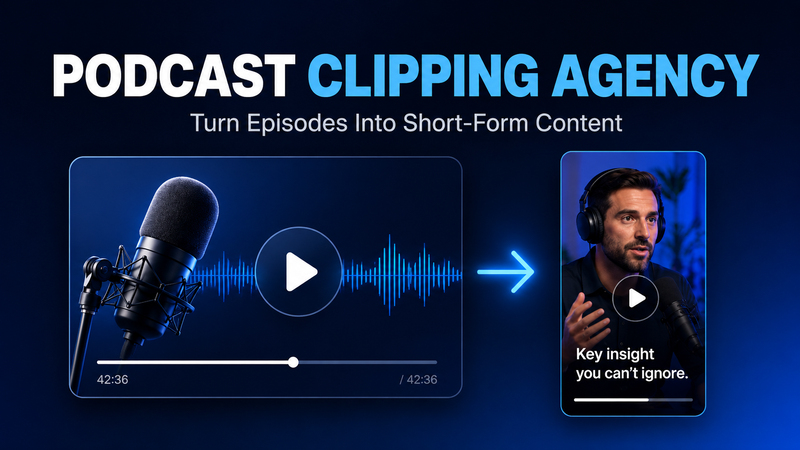

Most podcast teams put serious effort into creating the episode.
They book the guest. They prepare the questions. They set up the recording. They edit the audio, clean up the video, write a title, upload the episode, and then share the link on social media.
Then the episode gets a few views, maybe a handful of likes, and quietly moves down the feed.
That is where the problem starts.
A podcast episode is not just a single piece of content. It is usually packed with smaller moments that can stand on their own. A guest might share a personal story. The host might ask a sharp question. Someone might explain a confusing topic in a simple way. A quick answer might be more useful than the entire introduction.
But if those moments stay buried inside a 45-minute episode, most people will never see them.
This is where a Podcast Clipping Agency becomes valuable.
A podcast clipping agency helps turn long podcast episodes into short-form clips for platforms like TikTok, Instagram Reels, YouTube Shorts, LinkedIn, Facebook, and other social channels. The goal is not to cut random parts of the episode and post them everywhere. The goal is to find the strongest moments, shape them properly, and give the podcast more chances to be discovered.
A good podcast should not depend on one launch post.
If the episode has strong ideas, it should keep working long after it goes live.
What Does a Podcast Clipping Agency Do?
A podcast clipping agency takes long podcast content and turns it into short-form assets. These clips are usually edited with captions, cleaner pacing, stronger openings, and formats built for social platforms.
The source content can include:
Video podcast episodes
Guest interviews
Founder conversations
Expert Q&A sessions
Livestream conversations
Panel-style discussions
Webinar-style podcast recordings
Audio podcasts with supporting visuals
At the basic level, the work sounds simple. Review the episode, choose the best moments, edit them into clips, and prepare them for posting.
But good podcast clipping is not just video cutting.
A proper podcast clipping agency looks at the audience, the topic, the guest, the hook, the pacing, the platform, and the purpose behind each clip. The clip should not feel like a random piece of a longer conversation. It should feel like a useful standalone moment.
That is the difference between basic editing and strategic clipping.
Basic editing asks, “Can we make this clip look better?”
Good podcast clipping asks, “Would someone who has never heard of this podcast stop and watch this?”
That second question matters much more.
Why Podcasts Need Short-Form Clips
Most people do not discover a podcast by starting with the full episode.
They discover a moment.
A 30-second clip. A strong opinion. A useful answer. A guest story. A short section that makes them think, “This person actually knows what they are talking about.”
That small moment becomes the first touchpoint.
This matters because a full podcast episode asks for a lot of attention. A new viewer may not be ready to give 45 minutes to a show they do not know yet. They may not click a full episode link from a cold post. They may not even know why the episode is worth their time.
Short-form clips make the first step easier.
A good clip gives the viewer a sample of the episode without asking for the full commitment. If the clip is useful, they may follow the page, visit the profile, search the guest, or watch the full episode later.
Sometimes they simply remember the name. That still counts.
Visibility is often built through repeated useful moments, not one perfect upload. Podcast clips create those moments.
One Episode Can Become a Content Pipeline
A strong podcast episode is rarely just one idea.
It is usually a collection of smaller ideas sitting inside one long conversation. Some are educational. Some are story-based. Some are opinion-led. Some are useful because they show how the guest thinks.
One episode might include:
A personal story from the guest
A useful answer to a common question
A strong opinion about the industry
A mistake the audience should avoid
A short framework or lesson
A moment that shows the host’s personality
A clip that teases the full episode
A practical example or proof point
Each of these can become its own short-form clip.
That does not mean every episode should be forced into 30 clips. That is how a feed starts to feel like reheated leftovers. If an episode has seven strong moments, make seven strong clips. If it has twenty, great. The number is not the point.
The quality is.
A podcast clipping agency helps find the moments that are actually worth publishing, not just the moments that are easy to cut.
Podcast Clipping vs Basic Repurposing
A lot of podcast teams say they repurpose content, but in practice, they usually pull a few clips and hope one performs well.
That is better than doing nothing, but it is not a real system.
Basic repurposing is often casual. Someone watches part of the episode, grabs a moment that seems usable, adds captions, posts it, and moves on. The clip may be fine, but there is no larger plan.
A podcast clipping agency works with more structure.
Basic Podcast RepurposingPodcast Clipping AgencyPulls clips that seem usableSelects clips based on audience interestFocuses mainly on editingFocuses on selection, hooks, editing, and distributionPosts clips whenever readyBuilds a steady publishing rhythmTreats each clip as separateConnects clips to the larger podcast strategyMeasures success mostly by viewsLooks at retention, saves, comments, follows, clicks, and awarenessEnds after postingUses performance to improve future clips
The difference is not only polish. It is intent.
Basic repurposing creates clips. A podcast clipping agency helps create a repeatable content pipeline.
That pipeline is what keeps a podcast visible after the original episode goes live.
What Makes a Podcast Clip Worth Posting?
Not every podcast moment deserves to become a clip.
Some moments need too much background. Some take too long to reach the point. Some sound useful during the full episode but feel flat when removed from the conversation. This happens often because podcasts are natural conversations, not scripted short-form videos.
A strong podcast clip should be able to stand on its own.
A useful clip usually does one of these things:
Teaches one clear idea
Answers one specific question
Shares a short story
Challenges a common belief
Explains a mistake
Shows a useful example
Makes the guest or host more relatable
Creates curiosity about the full episode
The best clips feel complete. They do not feel like someone randomly cut 45 seconds from the middle of a conversation and hoped the algorithm would be generous.
A good clip has a clear point. It gives enough context. It does not try to say too much at once. It leaves the viewer with something useful, interesting, or memorable.
That is the standard.
Why Hooks Matter So Much
The first few seconds of a podcast clip decide a lot.
That may feel unfair to long, thoughtful conversations, but short-form platforms move quickly. People decide almost instantly whether they will keep watching.
Podcast conversations often start slowly. Someone says, “Yeah, that is interesting,” then gives background, then eventually reaches the strongest point. In a full episode, that feels natural. In a clip, it can lose the viewer before the value arrives.
A weak opening might sound like this:
“Yeah, so when we were talking about growing a podcast, there were a few things that stood out…”
A stronger opening would be:
“Most podcasts do not need more episodes. They need better distribution for the episodes they already have.”
The second version gives the viewer a reason to stay.
Good hooks do not need to be loud, fake, or dramatic. They do not need to sound like someone shouting into a ring light about a secret nobody asked for. They just need to make the value clear early.
Strong hooks often use:
A direct problem
A clear opinion
A common mistake
A surprising lesson
A simple question
A short story setup
A bold but honest statement
The goal is not to trick people into watching. The goal is to help them understand why the clip is worth their time.
Types of Podcast Clips That Work
A strong podcast clipping strategy usually includes a mix of clip types. This keeps the content from feeling repetitive and gives the audience different reasons to engage.
Educational Clips
Educational clips explain one useful idea from the episode. These work well for expert interviews, business podcasts, coaching podcasts, agency podcasts, and B2B shows.
The best educational clips stay focused. One clear idea is better than five scattered thoughts.
Story Clips
Story clips use personal experience, founder lessons, client examples, guest stories, or behind-the-scenes moments.
These clips help the audience connect with the person behind the microphone. A good story can make a podcast feel more human, which matters when someone is still deciding whether to follow.
Opinion Clips
Opinion clips are built around a clear point of view.
They do not need to be controversial. They just need to be specific. Generic advice disappears quickly. A clear opinion gives people something to remember, agree with, question, or discuss.
Proof Clips
Proof clips show evidence. This could include results, examples, client stories, numbers, case studies, or moments where the guest explains what actually worked.
These clips are useful because they help turn attention into trust.
Teaser Clips
Teaser clips create curiosity about the full episode. They do not give everything away, but they show enough value to make someone want more.
This type of clip is useful when the goal is to drive people toward the full podcast episode.
A Simple Podcast Clipping Workflow
A podcast clipping agency usually follows a clear process. Without one, clipping becomes random editing with captions.
StepWhat HappensWhy It MattersEpisode reviewThe full podcast is reviewed properlyFinds the strongest moments before editing beginsClip selectionThe best sections are chosenPrevents weak clips from filling the content calendarHook shapingThe opening is tightened or reframedHelps viewers understand the value quicklyEditingClips are trimmed, captioned, and formattedMakes the content easier to watchPlatform formattingClips are adapted for Shorts, Reels, TikTok, LinkedIn, and moreImproves fit across channelsPublishing supportClips are organized for consistent postingKeeps the podcast visible after launch dayPerformance reviewResults are checked over timeShows which topics and clips are working
The last step is easy to ignore, but it matters.
If guest stories get more comments, that tells you something. If educational clips get more saves, that matters. If one hook style keeps holding attention better, it should shape the next batch.
Good clipping is not just production. It becomes a feedback loop.
Common Mistakes Podcast Teams Make
One common mistake is trying to clip everything.
More clips do not always mean more reach. If an episode has seven strong moments, make seven strong clips. Do not stretch it into thirty weak ones just to fill the calendar. People notice filler. Platforms usually do too.
Another mistake is starting clips too slowly. A podcast may take time to warm up, but short-form clips need context quickly.
A third mistake is overediting. Too many zooms, effects, emojis, sound effects, and moving elements can make the clip feel cheap. Good editing supports the message. It should not fight the speaker for attention every second.
Another mistake is using the same clip everywhere without adjustment. A clip for LinkedIn may need a different caption than a clip for TikTok. A YouTube Short may need a stronger title. An Instagram Reel may need a cleaner first frame.
The core idea can stay the same, but the packaging should fit the platform.
The biggest mistake is treating podcast clipping like a small admin task. When done properly, clipping is part of podcast growth, audience building, and brand visibility.
It deserves more thought than “cut a few clips.”
Where Clipping Agency Fits In
For creators, founders, podcast hosts, and brands that want to turn podcast episodes into consistent short-form reach, Clipping Agency provides a structured Podcast Clipping Agency service built around finding the strongest moments and turning them into platform-ready clips.
The value is not just cutting an episode into smaller pieces. The value is knowing which moments are worth clipping, how to shape the opening, how to format the clip, and how to turn one episode into steady visibility.
This is useful for podcast teams that already publish good episodes but do not have the time, process, or internal team to turn those episodes into consistent short-form content.
A strong podcast should not disappear after one announcement post.
It should keep working.
Final Thoughts
A podcast clipping agency helps turn long conversations into short-form content that people are more likely to watch, share, and remember.
The strategy is simple, but it works.
Create strong episodes. Extract the best moments. Edit for clarity. Add strong hooks. Format for the right platforms. Post consistently. Learn from the results.
That is how a podcast becomes more than a long-form show.
It becomes a content pipeline.
And once that system is in place, every new episode has a better chance to keep working long after it goes live.
Comments
No comments yet. Be the first to comment!