
Video Clipping Services UK: From Footage to Reach
How brands can turn podcasts, webinars and interviews into useful short-form content without filming every week.
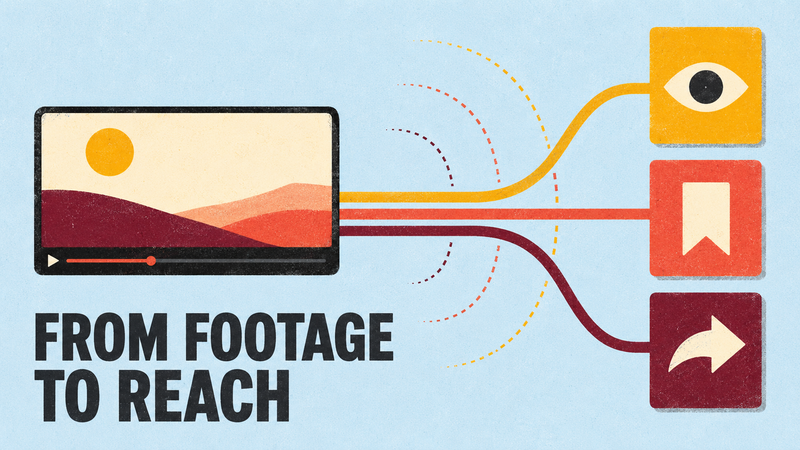

A 60-minute interview can contain several moments that deserve their own audience. There may be a clear answer to a customer question near the beginning, a useful story halfway through and a strong opinion towards the end. When the full video is uploaded once and forgotten, all three moments remain difficult to find.
Video clipping services turn long recordings into shorter, self-contained videos for platforms such as TikTok, Instagram Reels, YouTube Shorts and LinkedIn. A complete service normally includes reviewing the footage, selecting worthwhile sections, tightening the edit, adding captions, adapting the format and preparing each clip for publication.
For UK businesses, the appeal is straightforward. Recording new material every week takes time, but many companies already have webinars, interviews, podcasts, presentations and product demonstrations sitting in their archives. Clipping helps those recordings continue working after their original publication date.
When does a clipping service earn its cost?
A video clipping service earns its cost when it allows a business to publish useful content more consistently, reach the right viewers and reduce the amount of new filming required.
The return should not be judged only by the number of files delivered. Twenty average clips are not automatically more useful than six carefully selected ones. Each clip needs a clear subject, a reason for someone to watch and a role within the wider content plan.
Businesses exploring Video Clipping Services UK should look for a provider that understands both selection and editing. Cutting footage is only part of the work. The harder task is recognising which moments can attract attention without losing the context or credibility of the original conversation.
What video clipping involves
Some editing services expect clients to provide exact timestamps. The editor trims those sections, adds captions and returns the files. This can work when the client already has a content strategist reviewing every recording.
A more complete clipping service takes responsibility for finding the material as well as editing it. Its work may include:
Watching podcasts, webinars, interviews and livestreams
Marking sections with educational, emotional or commercial value
Removing repetition and unnecessary background information
Improving openings that take too long to reach the point
Reframing horizontal videos for vertical screens
Adding captions that are accurate and easy to read
Applying consistent fonts, colours and brand elements
Adding supporting footage only where it improves the explanation
Preparing suitable versions for different platforms
Organising approvals, revisions and final files
Reviewing results to improve future selections
The service may also include publishing and distribution. This should be confirmed before the campaign begins because receiving edited clips and running a complete clipping campaign are different arrangements.
How long-form footage becomes short-form content
The strongest clipping workflows begin with an objective rather than a visual template. If the team understands what the content needs to achieve, it can make better decisions about which moments deserve to be published.
1. Identify the intended viewer
The audience affects what the team should look for in the recording.
A London software company trying to reach operations managers may need clips about workflow problems and product use cases. A podcast aimed at first-time founders may benefit from honest stories about hiring, pricing and early mistakes. A consumer brand may need demonstrations that show the product being used in a recognisable situation.
Trying to speak to everyone usually produces broad clips that few people find personally relevant.
2. Define the purpose of the campaign
The next step is deciding what the clips are meant to accomplish. Common objectives include:
Introducing a brand or speaker to new viewers
Building trust around a specialist subject
Promoting a podcast or video series
Answering questions raised during the sales process
Demonstrating a product or service
Generating website visits or enquiries
A campaign may have more than one objective, but each individual clip should still have a clear job.
3. Review the full source video
The reviewer watches the recording and marks potential sections. Transcripts and automated tools can make this process faster, but they do not always capture tone, body language or the significance of a remark within the wider conversation.
Useful moments often appear where a speaker:
Gives a direct answer
Describes a costly mistake
Explains a difficult subject simply
Challenges a familiar assumption
Shares a specific result
Demonstrates how something works
Tells a story with a clear outcome
Not every valuable moment will sound dramatic. For many UK professional service firms, a calm and accurate explanation is more likely to build trust than an exaggerated opinion chosen solely for views.
4. Give the clip enough context
A short video needs to make sense to someone who has never seen the original recording. References such as “that situation,” “the previous version” or “what she said earlier” can leave viewers confused.
The editor may need to begin the clip a few seconds earlier, remove an unrelated comment or add a short line of introductory text. The aim is to supply the missing information without turning the opening into a long explanation.
Each clip should focus mainly on one idea. When several unrelated points are forced together, the viewer has little chance to absorb any of them properly.
5. Strengthen the first few seconds
Long-form discussions often begin slowly because the participants have time to develop an argument. Short-form content has less room for a gradual introduction.
A stronger opening might start with the conclusion, a clear problem or a sentence that identifies who the advice is for. This does not require clickbait.
For example, a business webinar might contain the following opening:
“Companies often blame the algorithm when the real problem is that their videos begin with 20 seconds of background information.”
The viewer understands the topic immediately and can decide whether the explanation is relevant.
6. Edit for clarity rather than constant movement
Good editing removes distractions while preserving the speaker’s personality. Pauses, repeated phrases and side comments can be trimmed, but every breath does not need to disappear.
Captions should be checked for names, technical terms and UK spelling. They also need to remain visible above platform controls. Graphics and supporting images can help, but they should not compete with the speaker or make a professional subject look like entertainment content.
The editing style should suit the brand. A legal consultancy and a comedy podcast should not look or sound identical.
7. Prepare the clip for where it will appear
The same core idea can be used across several platforms, although the presentation may need to change.
A detailed explanation may suit LinkedIn, while a shorter version with a more direct opening may work better on TikTok. YouTube Shorts can be useful for questions and demonstrations with ongoing search interest. Instagram Reels may suit visually clear lessons, stories and behind-the-scenes content.
Adjustments can include the length, opening text, caption, cover and call to action. This makes the content feel native to the platform without requiring a completely separate production for every channel.
8. Review what viewers actually did
Views can reveal reach, but they do not show whether the campaign is helping the business.
A more useful review may include:
Viewer retention during the opening
Average watch time
Completion rate
Saves and shares
Relevant comments
Profile visits
Website sessions
Newsletter sign-ups
Qualified enquiries
The figures should be considered together. A clip with moderate reach but several relevant enquiries may be more valuable than a viral clip watched mainly by people outside the intended market.
Clipping Agency’s Audience Distance Model
At Clipping Agency, one way to build a balanced campaign is to consider how far each viewer is from the business. We call this the Audience Distance Model.
It divides clips into three groups.
Far-audience clips
These are designed for people who do not know the speaker or brand. They need an accessible subject and enough context to make sense immediately.
Examples include a common mistake, a surprising fact, a useful demonstration or a clearly expressed opinion.
Near-audience clips
These speak to viewers who understand the problem and may already recognise the brand. The content can go deeper into methods, comparisons, case studies and practical decisions.
A potential customer may watch these clips to decide whether the company’s way of thinking matches their needs.
Decision-audience clips
These help suitable viewers understand an offer, overcome a concern or take the next step. They might explain how the service works, show a client result or answer a question about implementation.
A campaign made entirely of far-audience clips may attract views but produce few enquiries. A campaign containing only decision content may feel too promotional to reach new people. Using all three groups creates a more useful content mix.
This model also makes clip selection easier. Instead of asking whether a section is simply “good,” the team asks which audience it serves and what that viewer needs from it.
Real business uses for video clipping
A management consultancy
A consultancy could record a quarterly roundtable with senior advisers. One discussion might produce a broad clip about a familiar leadership mistake, a deeper clip explaining a decision-making framework and a client-focused clip addressing what happens during the first month of an engagement.
The clips come from the same conversation, but they serve viewers at different stages.
A regional recruitment firm
A recruitment company could use interviews with its consultants to create advice for candidates and hiring managers. Possible clips might cover interview preparation, salary conversations, poor job descriptions and the reasons strong applicants withdraw.
These subjects are closely related to the company’s work without turning every video into an advert.
A UK ecommerce brand
An ecommerce company may already record product demonstrations, customer videos and livestreams. Clipping can separate individual uses, features and questions into shorter videos.
One clip could demonstrate the product, another could explain who it is best suited to, and another could answer a common concern raised before purchase.
A podcast publisher
A podcast episode may contain several entry points for new listeners. A personal story could appeal to one group, while a detailed business lesson appeals to another.
The purpose of the clip is not to summarise the complete episode. It should give the viewer a satisfying moment while creating a natural reason to explore the full conversation.
A SaaS company
A recorded product webinar can become short feature demonstrations, customer use cases and answers to implementation questions. These clips may support social media, sales follow-ups and customer education, giving the recording value across several departments.
Pros and cons of video clipping services
The main advantages include:
Businesses can get more value from recordings they have already funded.
A regular publishing schedule becomes easier to maintain.
Founders and specialists do not need to film every social post separately.
Individual topics are easier for viewers to discover.
Clips can support awareness, education and conversion.
Audience response can guide future recording topics.
There are also disadvantages and limitations:
Poor source material will produce few worthwhile clips.
A fixed monthly quota may encourage weak selections.
Overediting can damage a speaker’s credibility.
Internal reviews are still needed for accuracy and brand voice.
Results can vary between platforms and subjects.
Clipping will not correct an unclear offer or an ineffective overall strategy.
The service is most effective when strong ideas already exist in the source material. Its role is to reveal and distribute those ideas, not manufacture expertise that is not present.
Common mistakes to avoid
A frequent mistake is selecting clips by length rather than meaning. A section may fit neatly into 30 seconds but still lack a complete point.
Other problems include:
Using an opening that depends on missing context
Selecting moments only because they sound controversial
Filling the screen with animated words and unnecessary stock footage
Publishing the same file and caption on every platform
Adding an unrelated sales message at the end
Ignoring captions errors in names or specialist terms
Measuring every result by total views
Changing the visual identity with every new batch
Producing more clips than the source material can support
Businesses also lose useful information when they never compare results. If certain questions repeatedly earn saves or website visits, those topics should influence the next recording.
What to ask before hiring a UK clipping service
Before choosing a provider, ask how it finds moments and how much of the process it handles.
Useful questions include:
Does the team watch the complete recording?
Who decides which sections become clips?
Are captions reviewed by a person?
How are technical terms and names checked?
Which platforms are included?
How many revision rounds are available?
Is publishing included or provided separately?
How are sensitive recordings and brand files stored?
Will performance be reviewed?
Can output increase when more footage becomes available?
Does the price include VAT?
Clear answers are more useful than promises about producing a large number of clips. The provider should be able to explain how its process supports the business objective.
Frequently asked questions
What are video clipping services?
Video clipping services convert longer recordings into shorter videos for social media and video platforms. The work may include footage review, moment selection, editing, captions, branding and platform preparation.
Which recordings can be clipped?
Podcasts, interviews, webinars, livestreams, presentations, tutorials, product demonstrations and event footage can all be used. The source needs to contain sections that remain valuable when separated from the full recording.
How many clips can be created from one video?
The number depends on the quality and focus of the recording. A strong 45-minute interview may contain several useful sections, while a longer but repetitive discussion may produce fewer. Quality should take priority over a fixed quota.
Can one clip be published everywhere?
Yes, although platform-specific adjustments may improve its performance. The opening, length, caption and call to action can be adapted without changing the central idea.
Are captions included in clipping services?
They usually are, but businesses should confirm this with the provider. Captions should be checked manually, particularly when the video contains names, numbers or specialist terminology.
Can AI replace a video clipping team?
AI can help create transcripts, identify possible sections and complete repetitive editing tasks. Human judgement remains important for context, tone, accuracy and deciding whether a moment is genuinely useful.
Does every video need to promote a service?
No. Educational and opinion-led clips can build trust without making a direct offer. Promotional content is more effective when it appears as part of a balanced campaign.
How long does it take to see results?
An individual clip may perform quickly, but a dependable strategy usually develops across several batches. Early results show which subjects and formats deserve more attention.
Use the footage you already have
Many UK businesses do not need another complicated production schedule. They need a more deliberate way to use the recordings they have already created.
A webinar can answer customer questions for months. A podcast can introduce a founder to new viewers. A product demonstration can help someone understand an offer before speaking to the sales team. Clipping makes those individual moments easier to find and share.
Clipping Agency helps businesses, creators and agencies turn long recordings into structured short-form campaigns. If valuable ideas are still buried inside your video library, the next step may be to organise and distribute them rather than record everything again.

Comments
No comments yet. Be the first to comment!