
Content Distribution Agency USA: Helping Good Content Reach the People It Was Made For
A practical look at why American brands need more than content creation, and how smarter distribution turns strong ideas into wider reach.
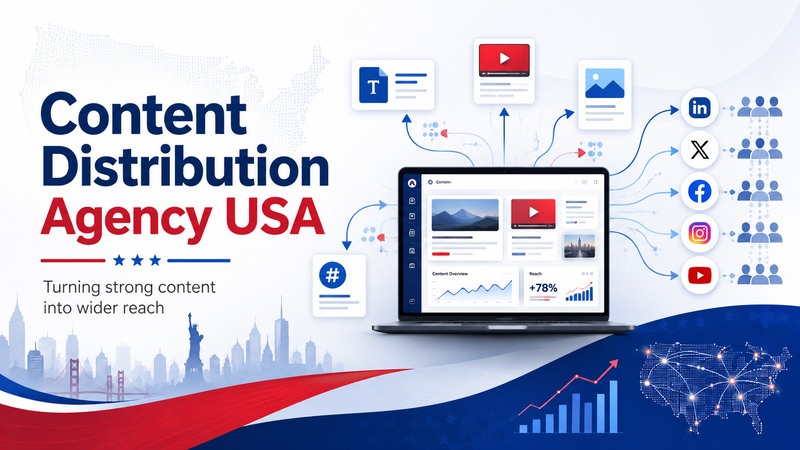

A lot of brands in the USA are making good content.
They are recording podcasts, publishing articles, hosting webinars, filming founder videos, creating customer stories, running livestreams, and posting long-form videos on YouTube. The work is there. The ideas are there. The effort is there.
The problem is that too much of that content is treated like a one-time event.
A podcast gets uploaded. A webinar replay gets emailed. A blog post goes live. A founder video is shared on LinkedIn. A YouTube video is published. Then the team moves on because the next asset is already due.
This is how good content gets buried.
Not because it was bad. Not because nobody needed it. But because it was not distributed properly.
A strong content asset should not only live in one place. It should become short clips, social posts, newsletter sections, founder-led posts, search-friendly snippets, sales assets, and follow-up material. It should be adapted for the way different people actually consume content.
That is where a Content Distribution Agency USA service becomes useful.
The job is not just to create more posts. The internet has plenty of posts. Some of them even survived three rounds of “make it more engaging,” which is always brave.
The real job is to help strong ideas travel further, reach more people, and build brand memory over time.
Good Content Is Only Half the Job
Content creation gets most of the attention.
Brands talk about what to write, what to record, what to publish, and what to design. That matters. Weak content cannot be saved forever by distribution. At some point, the thing itself has to be useful.
But once the content exists, the real question becomes simple.
What happens next?
If the answer is “we posted it once,” the brand is leaving value on the table.
A long podcast episode may have five strong moments inside it. A webinar may answer ten questions prospects keep asking. A customer story may include proof that should be used in sales conversations. A founder video may explain the company’s point of view better than a website page.
If all of that only appears in one format, most of the audience will never see it.
Distribution gives the content more chances to work.
Why USA Brands Need Stronger Distribution
The American market is crowded in almost every category.
SaaS companies are publishing more. Agencies are posting more. Coaches are building personal brands. Creators are turning every platform into a media channel. Consultants are sharing frameworks. Startups are trying to sound bigger than they are. Large companies are trying to sound more human than they are.
It is a lot.
In that kind of market, good content can disappear quickly.
A useful article may never rank. A smart podcast may get a small audience. A webinar replay may sit untouched. A founder post may perform for one day and vanish. A video may get views but not become part of a larger campaign.
This does not mean the content failed.
It often means the distribution was too narrow.
Better distribution helps a brand show up more often, in more formats, with a clearer message. It gives the audience more chances to notice, understand, and remember the brand.
Distribution Is Not Copying the Same Link Everywhere
Many teams confuse distribution with link sharing.
They publish a blog post and share the same link on LinkedIn, X, Facebook, and maybe in a newsletter. That is not useless, but it is not a full distribution strategy either.
Real distribution adapts the idea.
A podcast clip should not feel like a random cut from a longer conversation. A LinkedIn post should not read like a blog intro pasted into a social box. A newsletter section should not be the same caption used on every platform. A TikTok clip should not be formatted like a corporate webinar teaser from 2014. Nobody needs that kind of archaeology.
Each platform has its own rhythm.
People use LinkedIn differently than TikTok. They read newsletters differently than blog posts. They watch Reels differently than webinars. They save some content, skim other content, and ignore plenty.
A strong distribution strategy respects those habits.
It takes one core idea and turns it into the right format for the right channel.
One Asset Can Become a Whole Content System
A single strong piece of content can do much more than one job.
A podcast episode can become clips, quote posts, a LinkedIn post, a newsletter section, and a short blog recap. A webinar can become a short-form video series, a follow-up email, a carousel, a sales enablement asset, and a resource page. A long YouTube video can become Shorts, Reels, TikToks, social posts, and newsletter hooks.
The original asset becomes the source.
The distributed pieces become the pathways.
For example, one webinar could become:
A short clip answering one common question
A LinkedIn post explaining the main takeaway
A newsletter section for warm leads
A quote graphic from the speaker
A short article built around one key idea
A sales follow-up link for prospects
A few social posts around objections
A YouTube Short or Instagram Reel
A landing page section
A recap post for people who missed it
That is not content recycling in the lazy sense.
It is using the work properly.
If a team spends time creating something valuable, that asset should have more than one life.
The Best Distribution Starts Before Publishing
Many brands think about distribution too late.
They finish the article, podcast, webinar, or video. Then they ask where it should go.
That creates extra work because nobody planned for repurposing from the start.
A better approach is to think about distribution before the content is created. If a founder interview is being recorded, the team can prepare questions that may produce strong clips. If a webinar is being planned, the structure can include clear sections that can become short-form content later. If an article is being written, the main points can be shaped so they also work as social posts or newsletter ideas.
This does not mean making content robotic.
It just means being intentional.
Before creating a major asset, the team should ask:
What is the main idea?
Which parts could become short clips?
Which sections could become social posts?
What could support sales?
What should go into the newsletter?
What should become founder-led content?
Which platform matters most for this audience?
What should the audience remember after seeing it?
When the distribution plan is clear early, the content works harder later.
Short-Form Video Makes Distribution Easier
Short-form video is now one of the most useful tools in content distribution.
This does not mean every brand needs to chase trends. It means short clips can make strong ideas easier to discover.
A podcast clip can introduce a smart guest insight. A webinar clip can answer a buyer question. A founder clip can show personality and expertise. A product demo clip can explain one useful feature. A customer story clip can build trust.
Short clips work because they lower the commitment.
A viewer may not watch a full webinar from a brand they do not know. They may not listen to a full podcast episode. They may not read a full case study. But they might watch a short clip that gives them one clear idea.
That clip can become the doorway.
If the viewer cares, they can go deeper.
This is why clipping and content distribution often belong together. The long-form asset gives depth. The short-form clip creates discovery.
Distribution Builds Brand Memory
A brand does not become memorable from one post.
People need repeated exposure. They need to see the same themes, ideas, proof points, and personality more than once. They need to understand what the brand talks about and why it matters.
Distribution helps create that repetition without making every post identical.
One core idea can become a clip, a LinkedIn post, a newsletter paragraph, a short article, a social graphic, and a sales asset. Each version reinforces the message from a different angle.
This is how brands become known for something.
A SaaS company may become known for solving a specific workflow issue. A coach may become known for a clear method. A creator may become known for sharp breakdowns. A B2B brand may become known for practical insights. An agency may become known for helping content travel further.
Brand memory is built through repeated useful appearances.
Distribution creates those appearances.
What a Content Distribution Agency Actually Does
A content distribution agency helps turn content into a system.
That system usually includes more than posting. It includes reviewing the brand’s existing content, identifying the strongest ideas, choosing which formats make sense, creating short-form assets, writing platform-specific copy, organizing publishing schedules, and tracking performance.
A strong agency may help with:
Repurposing podcasts into clips and posts
Turning webinars into multi-post campaigns
Creating short-form videos from long-form content
Building LinkedIn posts from founder insights
Turning articles into social content
Writing newsletter sections from existing assets
Creating content calendars
Adapting ideas for different platforms
Supporting content with search-friendly placements
Reviewing performance and improving future output
The value is not only in production.
The value is in judgment.
Not every clip is worth posting. Not every paragraph should become a social post. Not every webinar deserves a full campaign. A good distribution partner knows what to push, what to reshape, and what to leave alone.
Common Distribution Mistakes
Brands often lose value because distribution is treated as an afterthought.
Someone publishes the content, shares it once or twice, and moves on.
That is usually not enough.
Common mistakes include:
Posting once and forgetting the asset
Sharing the same caption on every platform
Ignoring short-form video
Creating content with no repurposing plan
Posting on too many platforms without focus
Chasing trends that do not fit the brand
Treating distribution like admin work
Not tracking what actually performs
Forgetting to connect content to business goals
The biggest mistake is assuming good content will automatically find its audience.
Sometimes it does.
Most of the time, it needs a proper push.
Distribution Can Support Sales Too
Content distribution is not only about reach.
It can also help sales.
A short clip can answer a common objection. A customer story can build trust before a call. A webinar highlight can explain a product feature. A founder post can warm up prospects. A newsletter section can keep leads engaged. A useful article can help a prospect understand the problem more clearly.
When content is distributed properly, sales teams have more assets to use.
Instead of sending only a homepage link or a long PDF, they can send a relevant clip, post, article, or proof point that fits the conversation.
That makes content more practical.
It stops being something that only fills the marketing calendar and starts becoming something the business can actually use.
What to Look for in a Distribution Partner
Not every agency that posts content understands distribution.
Some agencies can fill a calendar but do not know how to repurpose long-form assets. Some can edit clips but do not understand positioning. Some can write captions but do not know how to build a system.
A good distribution partner should understand both content and channels.
Before choosing one, brands should ask:
Can they repurpose long-form content properly?
Do they understand short-form video?
Can they adapt ideas for different platforms?
Can they write in the brand’s voice?
Do they understand LinkedIn, TikTok, Reels, Shorts, newsletters, and search-friendly platforms?
Can they find strong moments inside podcasts, webinars, or videos?
Do they track performance and improve over time?
Can they connect content to business goals?
Do they avoid making every post feel like a template?
The right partner should make content more useful, not more mechanical.
Final Thoughts
Good content deserves more than one post.
A strong podcast, webinar, article, customer story, founder interview, or long-form video can become much more than a single asset. It can become clips, posts, newsletters, sales support, search-friendly content, and brand-building material.
A Content Distribution Agency USA service helps brands turn strong ideas into a wider visibility system.
It helps content show up in more places, in better formats, for the right audience.
For American brands that want more reach, trust, and value from the content they already create, distribution is no longer optional.
It is the difference between making content and actually getting seen.
Comments
No comments yet. Be the first to comment!