
How YouTube Shorts Clipping Campaigns Turn Long Videos Into Discovery
A practical look at how brands can turn podcasts, webinars, interviews, and founder videos into short clips that build reach and trust.
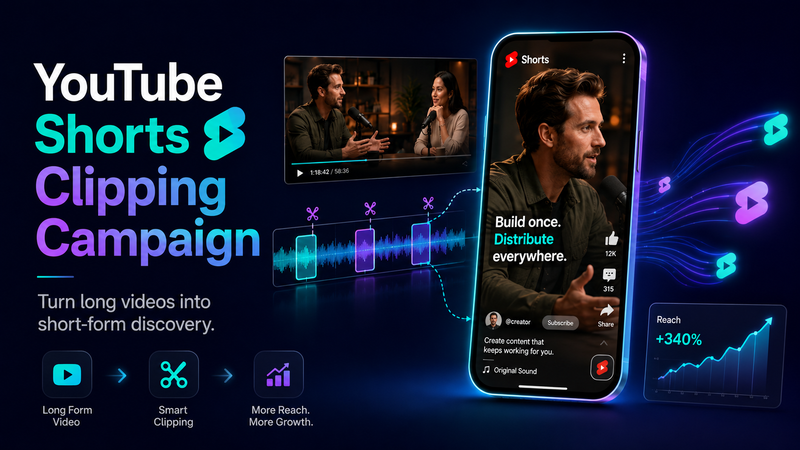

A long video can have a much longer life than its publish date suggests. A 45-minute podcast may hold a clear explanation that answers a common question, a short story that makes the speaker feel more relatable, a strong opinion that starts conversation, and a practical lesson that viewers can use immediately. The problem is that these moments are often buried inside the full recording, and many people will never reach them unless the brand gives those moments a smaller format.
That is why a Youtube Shorts Clipping Campaign can be useful for brands that already create video content. It turns long-form videos into short, focused clips that can be published on YouTube Shorts, giving the best parts of a recording more chances to be seen. Instead of relying on one full upload to reach every potential viewer, the brand creates several short entry points that are easier to watch, easier to share, and easier to understand.
A strong campaign is not just about cutting a video into pieces. It is about knowing which moments are worth clipping, how they should be framed, how often they should be posted, and what the brand should learn from the response. When this is done properly, Shorts can become a practical discovery layer for long-form content.
Why YouTube Shorts Fits Long-Form Content So Well
Long-form content gives brands space to explain ideas properly. A podcast can show personality and depth. A webinar can teach a process step by step. A founder interview can show how a company thinks. A customer conversation can reveal real problems and outcomes in a way that short promotional copy rarely can.
The challenge is that long-form content asks for time before the viewer has built enough trust. Someone may be interested in the topic, but they may not be ready to watch a 40-minute video from a brand they have only just discovered. A Short lowers that barrier. It gives the viewer one useful idea first.
If that short clip is clear and relevant, it can lead to deeper actions. The viewer may open the channel, watch another Short, search for the full video, subscribe, or visit the brand website later. This is why Shorts should not be treated as a separate side project. They can help long-form videos reach people who would not have found them through the full upload alone.
What a Real Clipping Campaign Looks Like
There is a difference between posting a few clips and running a campaign. Posting clips means selecting moments when the team has time and uploading them without much structure. A campaign has a plan behind it. It connects the clips to a topic, an audience, a publishing rhythm, and a wider brand message.
A good YouTube Shorts campaign usually includes:
A clear source video or content library
A list of topics the brand wants to be known for
A process for selecting strong moments
A consistent Shorts format
Titles and descriptions written with intent
A publishing rhythm that the team can sustain
A review process for performance and audience response
This structure matters because short-form content can become messy very quickly. If the brand clips anything that sounds interesting, the channel can start to feel scattered. If every clip supports a clear message, the audience begins to understand what the brand stands for.
Choosing the Right Source Videos
Not every long video should become a Shorts campaign. Some videos are useful as full pieces but do not contain enough moments that work on their own. Others may be too scripted, too slow, or too focused on internal details that the audience will not care about.
The best source videos usually have clear explanations, natural delivery, and ideas that connect to audience problems. A simple interview can produce better Shorts than an expensive brand video if the speaker explains things clearly and speaks with real experience.
Good source material can include:
Founder interviews with clear opinions
Podcast episodes with useful topic sections
Webinars that explain a process or framework
Customer interviews with real pain points
Product demos that answer buyer questions
Educational YouTube videos with practical lessons
Event talks with memorable takeaways
Livestreams with honest and unscripted moments
For example, a 50-minute interview about content distribution could become several Shorts. One clip might explain why long videos are underused. Another might show how to choose better short-form moments. Another might discuss why consistency matters more than one viral upload. Another might explain how to measure whether Shorts are bringing real interest. Each clip serves a different purpose, but all of them support the same topic.
How to Spot a Clip That Can Stand Alone
The strongest Shorts usually come from moments that are complete enough to make sense without the full video. This is one of the most important parts of clipping. A viewer should not feel like they arrived halfway through a conversation with no context.
A good clip has one main idea. It does not try to cover the entire video. It gives the viewer one problem, one lesson, one answer, or one useful perspective.
A moment is usually worth clipping when it has:
A clear opening thought
One focused message
Enough context for a new viewer
A practical or interesting takeaway
Natural delivery from the speaker
A connection to the brand’s topic
A reason for someone to comment, share, save, or watch again
This is where many campaigns improve immediately. Instead of asking, “Can we clip this?” the better question is, “Would this make sense to someone who has never seen us before?” If the answer is yes, the clip has a better chance of working.
Formatting Shorts Without Losing the Human Feel
Shorts need to be easy to watch, but they do not need to feel overdone. A lot of brand content becomes weaker when it is edited too aggressively. The captions are too loud, the cuts are too fast, the music does not fit, and the speaker starts to feel less natural.
For brand content, clarity is usually more important than noise. The clip should begin close to the useful idea. Captions should be readable. The speaker should be framed properly for vertical viewing. The pacing should remove dead space without removing the natural rhythm of the speaker.
A clean editing process can include:
Start near the strongest line or idea
Remove long pauses, repeated words, and slow setup
Crop the video cleanly for vertical viewing
Keep the speaker’s face and hands visible when useful
Use captions that are easy to read on mobile
Add light branding only where it feels natural
Make sure the clip still works without sound
End with a complete thought or a natural reason to watch more
The goal is to make the viewer feel like the clip respects their time. It should be short, but it should not feel rushed. It should be polished, but it should not feel fake.
Using Titles to Make the Clip Easier to Understand
A good YouTube Short needs a clear title. The title helps viewers understand why the clip is worth watching, and it helps the campaign stay focused around the right ideas. The title does not need to sound dramatic. It needs to be useful.
Strong titles often focus on a specific problem, mistake, lesson, or outcome. For example:
Why Your Long Videos Are Not Getting Seen
How to Turn One Podcast Into More Content
The Mistake That Makes Shorts Feel Random
What Makes a Clip Worth Posting
Why One Viral Short Is Not a Strategy
These titles work because they tell the viewer what the clip is about. They also make the content easier to organize when the brand is reviewing performance later.
Building a Publishing Rhythm That Can Last
A clipping campaign needs consistency, but that does not mean publishing weak clips just to stay active. The best rhythm is one the team can maintain without lowering quality.
A useful starting point is three to five Shorts per week from one strong long-form video. This gives the brand enough clips to test different ideas while still keeping selection tight. If the brand has a larger content library, the rhythm can increase, but only if the quality stays strong.
A simple weekly workflow could look like this:
Choose one strong long-form video
Review it for standout moments
Select six to ten possible clips
Narrow the list to the strongest three to five
Edit each clip for Shorts
Write clear titles and descriptions
Publish across the week
Review performance before selecting the next batch
This kind of system helps the brand avoid random posting. It also gives the team enough data to see what is working.
What to Measure Beyond Views
Views can be helpful, but views alone do not prove that a campaign is working. A clip can get views without attracting the right audience or building any real interest. A stronger campaign looks at the full picture.
Useful metrics include:
Watch time
Retention
Likes
Comments
Shares
Subscribers gained
Channel visits
Full video clicks
Website clicks
Leads or assisted conversions
Each metric gives a different signal. Strong retention suggests the clip held attention. Comments may show that the topic created interest. Shares can show that the idea felt useful or relatable. Subscribers gained can show that viewers wanted more from the channel. Full video clicks suggest that the Short helped move people toward deeper content.
The best campaigns use this information to improve future clips. If one topic keeps creating comments, it may deserve a longer video. If one speaker consistently performs well, that person may need to appear more often. If certain openings lose viewers quickly, the format may need to change.
Common Mistakes That Weaken Shorts Campaigns
A YouTube Shorts clipping campaign can lose value when the team treats it as a content volume exercise. More clips do not automatically mean more reach, more trust, or more growth. The clips still need to be clear, useful, and connected to the brand’s wider message.
Common mistakes include:
Choosing clips that need too much missing context
Making every Short feel like a sales pitch
Starting with a slow setup
Using captions that are difficult to read
Cropping the speaker poorly
Uploading without a consistent schedule
Posting weak clips just to increase volume
Ignoring titles and descriptions
Measuring only views
Failing to learn from audience response
Avoiding these mistakes keeps the campaign focused. Every Short should help the viewer understand one idea, remember one point, or feel more familiar with the people behind the brand.
Final Thoughts
A YouTube Shorts clipping campaign is a practical way to give long-form video a longer life. It helps brands turn podcasts, interviews, webinars, founder videos, and educational content into smaller moments that can reach new viewers and support channel growth over time.
The strongest campaigns are built with care. They begin with useful source material, choose clips based on audience value, format each clip for short-form viewing, publish consistently, and review the results honestly. Over time, this creates a content system where every long-form video has more than one chance to be discovered.
For brands already investing in video, Shorts should not be an afterthought. The long video holds the depth, but the clips often carry the best ideas into the feed. When those clips are selected well and published with purpose, they stop being random short videos and become a real discovery channel.

Comments
No comments yet. Be the first to comment!