
Logo Clipping Campaign: The Brand Friction Fix
Solving brand ad blindness by embedding visual watermarks naturally into high-retention short-form video stories.
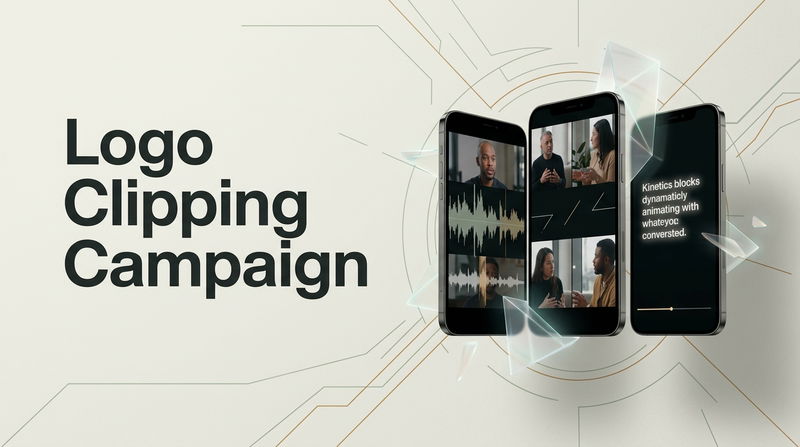

One of the most persistent hurdles facing marketing leaders and growing companies is watching substantial advertising budgets get completely ignored on handheld media feeds. A creative team can spend weeks refining an animated corporate commercial, perfecting product messaging, and selecting target demographics. Yet when those ads go live across mobile feeds, viewer retention plummets within the opening two seconds. The impression counter registers paid deliveries, but prospective customers swipe past before processing the brand name.
Most businesses misinterpret this reaction as an issue with product pricing, offer value, or visual typography. In reality, the resistance comes from how the brand is introduced. Modern mobile users have developed an instinctive defense against commercial interruptions. The moment a video looks like a paid corporate pitch, viewers skip it. Building genuine brand familiarity requires removing commercial friction. By launching a coordinated Logo Clipping Campaign, organizations embed their visual identity naturally into engaging, creator-led vertical videos, allowing audiences to absorb the brand mark while enjoying entertaining and educational content.
Obstacle 1: The Commercial Intro Triggers Immediate Ad Blindness
The first point of failure for standard video promotion is opening with corporate fanfare. Traditional broadcast habits encourage marketing teams to start videos with bold company title cards, spinning 3D logos, or formal executive introductions. In a television broadcast or cinema setting, audiences tolerate these introductory bumpers. On a handheld mobile stream, that exact approach guarantees an immediate upward swipe.
Mobile scrollers operate in fast evaluation loops. When an unfamiliar video opens with corporate branding, the subconscious registers an advertisement. The viewer anticipates an aggressive sales pitch and scrolls to the next post before the core argument is made. The brand pays for the media slot, but the message is lost.
Before (The Common Mistake): Opening a vertical video with a three-second corporate animation or full-screen logo reveal that signals an advertisement before sharing any useful information.
After (The Practical Fix): Start on frame one with an intriguing question, an unexpected fact, or a compelling human dialogue. Position the brand logo as a clean, discreet watermark in the upper third of the vertical frame. This allows the story to hook the viewer while the brand mark stays visible throughout the entire clip.
Obstacle 2: Static Watermarks Get Covered by Interface Buttons
Even when marketing teams understand the value of subtle branding, they often fail to account for the unique interface layouts of mobile platforms. Exporting a horizontal video with a logo in the bottom corner causes that graphic to disappear underneath platform action icons, user handles, and caption panels.
Handheld social applications place dense visual overlays along the bottom and right edges of the screen. If a brand mark is placed without calibrated safe-zone boundaries, the logo gets obscured or clashes with native interface text. The video might generate thousands of views, but nobody can actually read the company name.
Before (The Common Mistake): Placing a logo in the bottom-right or lower-left corner of the video frame, where native like buttons, share icons, and account descriptions cover it completely.
After (The Practical Fix): Calibrate visual safe zones to anchor the logo mark within the top twenty percent or upper center of the 9:16 layout. Maintain a clean margin away from top search bars and user profile links, ensuring the brand identity remains clear and legible on every mobile device.
Obstacle 3: Uncaptioned Dialogue Loses Silent Scrollers
A substantial majority of mobile video consumption happens with device volume turned off completely. Marketing teams frequently produce rich video discussions with excellent vocal clarity, yet they neglect to format the visual text. They assume that if an idea is compelling, viewers will naturally tap to hear the sound.
If a branded video appears on a muted feed without dynamic subtitles, the viewer sees an unidentified person speaking in silence. Without text cues to explain what is happening, the viewer swipes past. An uncaptioned video loses most of its potential reach, rendering the embedded logo invisible to the majority of mobile users.
Before (The Common Mistake): Relying on raw voice audio or faint, unstyled system captions that blend into the background and fail to command visual attention.
After (The Practical Fix): Apply high-contrast kinetic subtitles synchronized directly with speech. Highlight primary keywords in branded accent colors, allowing silent viewers to absorb the full intellectual argument visually and prompting them to unmute their phones.
Obstacle 4: Campaign Burnout from Manual In-House Management
Recognizing the strategic benefits of decentralized video distribution is straightforward, but managing the process internally creates severe operational drag. Sifting through hours of footage, keyframing vertical crops, verifying safe zones, styling subtitles, negotiating with individual creators, and reviewing submissions requires fifteen to twenty hours of tedious administrative work each week.
When an internal marketing department tries to manage this complex process alone, team fatigue sets in quickly. Marketers spend their workdays managing creator messages, checking spreadsheets, and verifying timestamps instead of focusing on overarching messaging and strategy. Quality checks slip, publishing cadences become erratic, and campaigns lose momentum before discovery engines can build meaningful audience reach.
Before (The Common Mistake): Trying to manually recruit creators, review every video cut, and manage payouts in-house, leading to administrative exhaustion and inconsistent publishing schedules.
After (The Practical Fix): Rely on a dedicated clipping infrastructure that manages creator sourcing, quality control, brand-safety verification, and automated payouts. The brand provides its logo kit and source material, while an organized production pipeline delivers consistent, brand-safe distribution across the web.
Traditional In-House Ad Management vs. Dedicated Clipping Infrastructure
Weekly Administrative Investment
Traditional In-House Management: Requires fifteen to twenty hours per week spent negotiating creator agreements, checking video submissions, and adjusting ad auction bids.
Dedicated Clipping Infrastructure: Operates as a streamlined, hands-off pipeline, requiring minimal internal management while delivering consistent output.
Content Distribution Scale
Traditional In-House Management: Usually limited to a handful of creator partnerships per quarter due to communication and review bottlenecks.
Dedicated Clipping Infrastructure: Powers dozens of verified, brand-safe video publications each month across a wide network of independent channels.
Brand-Safety Assurance
Traditional In-House Management: Prone to missed errors during rushed internal reviews, resulting in off-brand placements or interface overlap.
Dedicated Clipping Infrastructure: Multi-layer editorial verification checks every clip against documented brand rules before publication.
Audience Engagement Style
Traditional In-House Management: Relies on interruptive paid ad formats that mobile scrollers instinctively avoid.
Dedicated Clipping Infrastructure: Integrates brand marks cleanly into organic, high-retention stories that viewers watch voluntarily.
Frequently Asked Questions
How does passive logo integration drive measurable business growth?
When potential customers repeatedly see your brand mark across interesting, informative videos in their everyday social feeds, your business gains trusted familiarity. Over time, that repeated organic exposure translates into increased direct brand searches, website visits, and inbound inquiries, establishing steady pipeline growth that outlasts temporary advertising campaigns.
How does a company ensure independent creator clips maintain brand safety?
Every video submission undergoes strict review against documented brand safety rules before publication. Reviewers check visual placement, subtitle language, and background context. Any submission that fails brand guidelines is sent back for adjustments or rejected, guaranteeing that only safe, high-quality assets reach public feeds.
What styles of brand assets work best for logo clipping campaigns?
Clean vector logos, minimalist wordmarks, and simple icon badges work best on mobile screens. When paired with engaging stories, educational interviews, or practical tips, the logo sits comfortably in the frame without distracting from the narrative, allowing viewers to absorb the identity naturally while enjoying the content.
Moving Beyond Commercial Disruption
Building enduring brand authority in modern media does not require chasing intrusive advertising tactics or shouting over your audience with slick sales pitches. It requires meeting people where their attention already lives and providing genuine value before asking for a sale. When your visual identity becomes a natural, consistent element within high-retention video stories, your brand transitions from a commercial interruption into a recognized industry authority.
What has been your biggest frustration when promoting your brand on mobile feeds, and where does your team encounter the most friction when repurposing video content? Share your perspective in the comments below.

Comments
No comments yet. Be the first to comment!