
Logo Clipping Campaign: The Video Banner Trap
Why static watermark branding fails on mobile feeds and how organic creator staging builds real brand equity.
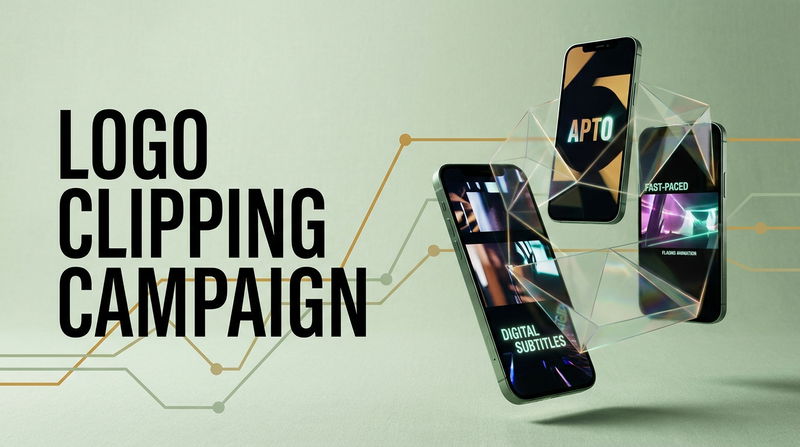

The lingering assumption that stamping an unmoving corporate logo over a short video creates lasting brand awareness is one of the most wasteful habits in modern digital marketing. Creative departments, consumer brands, and venture-backed software companies dedicate months to drawing vector emblems, refining color palettes, and commissioning high-gloss video reels. Once those visual assets are exported, marketing teams lock an opaque brand watermark into the upper corner of the frame, buy programmatic video distribution, and watch dashboard impressions climb into the hundreds of thousands.
The cold reality surfaces when branded search volume, organic website traffic, and customer acquisition metrics remain flat. When everyday users scroll through mobile feeds, their eyes recognize a static corner emblem within a fraction of a second. Modern scrollers have developed strong subconscious filters against generic commercial ads. The moment a video looks like a paid corporate broadcast, users swipe upward without ever registering who paid for the placement.
Building genuine brand equity in modern media environments requires moving beyond passive corner badges. True brand recall happens when your visual identity is seamlessly woven into the storyline of entertaining, high-retention video moments. Innovative brands deploy a structured Logo Clipping Campaign to place their visual mark inside an active network of independent creator videos, embedding their identity directly into daily mobile feeds where audiences actually pay attention.
The Breakdown of the Static Corporate Badge
The concept of the brand watermark was invented for horizontal broadcast television. Decades ago, placing a stationary logo bug in the lower corner of a television screen made sense because viewers watched passive programming from across the living room. Commercial breaks were predictable interruptions that viewers tolerated while waiting for the next segment of their program.
On personal mobile screens, that dynamic has been completely dismantled. Modern audiences consume video on personal handheld devices while scrolling with rapid thumb motions. The human brain evaluates a post within the first two seconds, actively searching for authentic human emotion, humor, conflict, or practical utility. When a clip begins with a clinical product beauty shot, a high-contrast corporate badge, or an obvious corporate slogan, the viewer subconsciously labels it as an advertisement.
Moreover, recommendation algorithms on short-form video platforms measure viewer retention to the millisecond. When an asset triggers immediate skips because of rigid corporate staging, platform algorithms stop recommending the video, driving up promotion costs and slashing organic sharing. Achieving sustainable visibility requires turning your logo into a natural, contextual element of organic creator narratives rather than an artificial stamp applied to an unwanted sales pitch.
What Fails vs. What Works: Modernizing Visual Brand Strategy
Moving beyond static watermark placement to organic brand immersion requires setting aside obsolete advertising practices and adopting decentralized, creator-driven visual campaigns:
What Fails: Pasting a heavy corporate watermark in the corner of a video, expecting passive viewers to memorize your company name.
What Works: Weaving your visual identity into the environment, clothing, physical product handling, or on-screen kinetic graphics within native creator stories.
What Fails: Producing clinical, corporate product demonstrations that feel completely disconnected from the casual culture of mobile video feeds.
What Works: Distributing your brand assets across an independent network of niche creators who showcase your visual mark during relatable real-world situations.
What Fails: Relying on twenty seconds of promotional setup before revealing how your product or service actually helps the consumer.
What Works: Delivering an immediate visual or narrative hook in the opening second, pairing the visual emblem with an engaging problem-solving moment.
What Fails: Publishing branded video assets exclusively from your company corporate social handle, restricting reach to users who already follow your account.
What Works: Syndicating native creator cutdowns across dozens of external channels, exposing your brand identity to varied demographic subcultures simultaneously.
What Fails: Creating silent-unfriendly video ads that lose all narrative context when viewed by users browsing with device sound muted.
What Works: Incorporating high-contrast kinetic subtitles with bold keyword color accents, ensuring your brand message lands cleanly with or without audio.
What Fails: Concentrating your entire video budget on a single massive production that airs for two weeks and is subsequently forgotten.
What Works: Deploying a steady, continuous syndication cadence of thirty to fifty organic creator cutdowns every month to maintain ongoing brand familiarity.
The Psychological Foundations of Contextual Brand Recall
Many brand managers believe that building brand awareness is simply a matter of making the logo bigger. When a campaign fails to deliver results, the default reaction is often to enlarge the emblem, make the colors brighter, or hold the final title card on screen for several additional seconds.
In reality, brand recall depends on emotional context rather than visual scale. When an audience member watches a creator overcome a frustrating technical problem, complete a demanding fitness challenge, or explain a clever everyday hack, the viewer experiences a genuine sense of emotional satisfaction. When your brand logo appears naturally during that moment of resolution, the viewer associates your visual identity with that positive feeling.
Visual timing also plays an important role. The most memorable branded video clips align visual motion with narrative pacing. When a creator introduces your product or reveals your brand mark, that moment should coincide with an intentional camera punch-in, a dynamic scene transition, or an emphatic verbal statement. By connecting your visual identity to narrative momentum, the brand feels like a natural partner in the story rather than an unwanted commercial intrusion.
The Operational Burden: The Hidden Trap of Manual Outreach
While the strategic advantages of decentralized visual branding are clear, attempting to manage dozens of independent creators manually creates immense administrative drag. An internal marketing team must locate reliable video editors, initiate hundreds of cold outreach messages, negotiate commercial licensing agreements, verify that each creator displayed the logo accurately, and compile cross-platform analytics.
For a marketing director or small startup team responsible for product roadmaps, lead generation, and partner relations, this administrative burden quickly drains creative and strategic energy. Communication breaks down, asset delivery falls behind schedule, and promotional momentum evaporates before recommendation algorithms can register the brand footprint.
Transitioning to an organized production pipeline eliminates this administrative friction entirely. The brand provides brand guidelines, master logo files, and strategic messaging pillars. A dedicated production framework manages creator recruitment, visual compliance checks, asset quality control, and consolidated performance reporting. This workflow allows internal brand teams to focus on core product strategy while an automated distribution engine works around the clock to embed their visual identity across mobile media.
Solo In-House Coordination vs. Managed Clipping Infrastructure
Weekly Administrative Overhead
Solo In-House Coordination: Demands fifteen to twenty hours every week manually tracking email threads, negotiating individual creator rates, and reviewing rough cuts.
Managed Clipping Infrastructure: Completely hands-off delivery pipeline that transforms brand assets into finished vertical video placements without consuming internal staff hours.
Asset Distribution Volume
Solo In-House Coordination: Typically limited to three or four creator videos per month due to bandwidth constraints and coordination bottlenecks.
Managed Clipping Infrastructure: Consistently yields thirty to fifty high-retention creator placements per campaign, ensuring wide multi-niche brand saturation.
Brand Compliance and Safe-Zone Precision
Solo In-House Coordination: Frequently produces videos where the logo mark is blocked by native platform icons, caption panels, or account navigation bars.
Managed Clipping Infrastructure: Strict safe-zone verification ensures your logo mark, product placement, and messaging remain completely visible across every mobile network.
Internal Focus and Strategic Impact
Solo In-House Coordination: Internal marketing attention is diverted toward tedious video revisions and file transfers, pulling focus from core business priorities.
Managed Clipping Infrastructure: Marketing leadership stays focused on high-level growth strategy while an external engine systematically expands brand authority.
Frequently Asked Questions
Does integrating a logo into creator videos generate real business inquiries?
Yes, with noticeably higher brand recall and conversion quality than traditional banner advertising. When prospective customers repeatedly see your visual mark integrated into organic creator videos across their daily feeds, they develop natural brand familiarity. That consistent exposure drives significant increases in branded search volume, website traffic, and direct product conversions over a sixty-day period.
How does a brand ensure creators represent the visual identity accurately?
In an organized campaign, every creator receives strict visual guidelines outlining permitted logo orientations, color treatments, and contextual placement rules. Every submission undergoes manual compliance review before publication to verify that the brand emblem is displayed crisply, positioned within safe margins, and presented in an appropriate narrative context.
Can a logo clipping campaign work for business-to-business products as well as consumer brands?
Yes. Business-to-business brands perform exceptionally well when their logo is paired with creators who share software workflows, productivity strategies, business case studies, or operational tutorials. Placing your visual identity inside educational industry content positions your company as a trusted, foundational resource among business decision-makers.
Forward Horizons in Visual Distribution
The future of digital advertising does not belong to intrusive, commercial interruptions that demand attention. It belongs to brands that respect audience context and embed their identity directly into the natural flow of culture.
Treating mobile screens like static digital billboards will continue to waste marketing capital while consumers swipe past. By embracing an organic, creator-led video clipping campaign, you establish an authentic relationship with prospective customers that compounds over time. When your visual mark lives inside the compelling stories audiences choose to watch every day, your brand authority grows quietly and sustainably across the digital landscape.

Comments
No comments yet. Be the first to comment!