
Podcast Clipping Agency: The Show Extraction Guide
A step-by-step production blueprint to convert extended conversational recordings into high-converting vertical video assets.
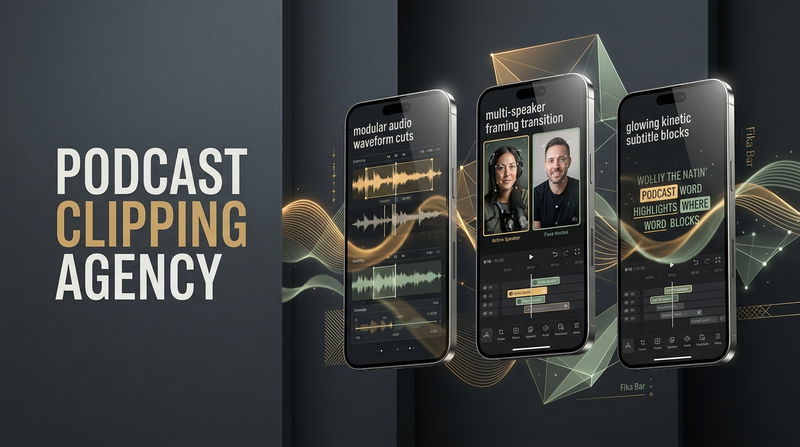

Transforming a finished conversational recording into dependable subscriber discovery is one of the most stubborn operational bottlenecks facing modern show producers and independent creators. Creative teams spend hours researching subject backgrounds, preparing detailed question outlines, and balancing multi-channel vocal tracks. Once the dialogue concludes, the full-length master file is uploaded to streaming directories, a social announcement is posted across personal channels, and the show quickly stalls. New listeners rarely materialize because digital audiences almost never explore podcast directories looking for unvetted names.
Treating an interview show as a static, isolated audio file is the primary reason promising broadcasts fail to build momentum. Modern audience attention lives on fast-moving algorithmic video feeds that prioritize immediate emotional hooks, active visual editing, and self-contained lessons. Overcoming this visibility barrier requires working with a dedicated Podcast Clipping Agency to methodically deconstruct full-length recordings into focused, high-retention vertical video cutdowns, delivering your strongest conversational moments straight into daily mobile feeds.
The Structural Realities of Modern Show Discovery
Building a loyal audience today requires understanding the physical environment where modern media consumption occurs. A standard sixty-minute interview represents a deep conversational journey containing warm-up banter, detailed context, and gradual thematic conclusions. For a dedicated subscriber who already knows and trusts the host, this relaxed progression is deeply engaging. For an unfamiliar person scrolling through a handheld video feed during a brief pause in their day, an unprompted hour-long audio commitment represents an overwhelming demand on their attention.
When producers attempt to fix this discovery gap by uploading unedited video crops, static title card graphics, or thirty seconds of unstructured dialogue, the results remain flat. Videos published without an intentional narrative arc, kinetic typography, or clear visual safe zones fail to retain mobile attention. Viewers swipe upward before the speaker completes their thought, signaling to discovery algorithms that the content failed to connect with the audience.
Professional content extraction is not arbitrary video chopping. It is an editorial discipline that connects dialogue curation, dynamic visual reframing, and algorithmic sound optimization. Approaching a full interview through an organized production framework turns static recordings into an active fleet of digital discovery points.
Phase 1: Dialogue Curation and Hook Isolation
The first stage of the workflow takes place directly on the conversational timeline before opening visual formatting tools. The objective is to audit the entire interview and isolate distinct, self-contained exchanges that deliver immediate intellectual or emotional value without requiring external context.
Locating the Core Revelation: Traditional interviews build toward a climax through extensive preliminary setup. In mobile feeds, that extended setup causes instant viewer drop-off. The extraction process removes conversational preliminaries, beginning the excerpt at the exact millisecond where the primary claim, counter-intuitive insight, or compelling realization lands.
Isolating Three Independent Narrative Angles: A substantive dialogue rarely explores only one topic. It typically contains a vulnerable personal reflection, a controversial debate, and a tactical step-by-step framework. Isolating these distinct moments creates targeted assets tailored for varied community interests.
Calibrating Immediate Intellectual Impact: The opening three seconds of an extracted cut must feature a clear assertion or an intriguing question that arrests scroll speed.
Mapping Thematic Subculture Buckets: Categorize extracted discussions into specific interest buckets, such as leadership dilemmas, operational productivity, contrarian industry predictions, or personal resilience. This categorization ensures the resulting assets appeal to specific niches across mobile discovery feeds.
Phase 2: Dynamic Multi-Speaker Framing and Visual Rhythm
Pairing isolated conversational dialogue with vertical video requires deliberate visual staging. Simply cropping a horizontal wide-angle shot or leaving a static camera running produces visual fatigue, prompting users to swipe away.
Executing Rhythmic Speaker Cuts: The human eye requires visual stimulation to stay engaged on compact handheld screens. Transitioning dynamically between the speaker and the listener, and punching in slightly on emphatic declarations, creates visual momentum that prevents passive viewer fatigue.
Maintaining Interface Safe Zones: Mobile social platforms place interface icons across the edges of the screen, including right-side action buttons, bottom caption trays, and top account navigation bars. All speaker framing, lower-third titles, and visual emphasis elements must remain anchored inside the central safe zone to avoid being blocked by native interface tools.
Highlighting Expressive Reactions: Conversations are deeply human. Featuring silent, expressive listener reactions, nods, and genuine laughter during critical statements adds emotional weight and authenticity to the discussion.
Contextual Visual Staging: When the discussion touches on concrete data or historical events, inserting relevant archival imagery, clean data graphics, or contextual overlays clarifies complex concepts without breaking narrative momentum.
Phase 3: Silent-First Typography and Audio Equalization
A vast majority of vertical video browsing takes place in settings where device sound is completely muted. A distribution strategy that relies solely on audible speech to attract curiosity loses potential listeners before they ever turn their phone volume on.
High-Contrast Kinetic Typography: Subtitles must appear in lockstep with the natural rhythm of speech. Highlighting primary keywords in bright, contrasting accent colors pulls silent viewers directly into the conversational arc, prompting them to unmute their device.
Mobile Vocal Equalization: Studio recordings optimized for high-end headphones often sound muffled or uneven on tiny smartphone speakers. Applying vocal multiband compression, cleaning low-end rumble, and boosting speech clarity in the upper mid-range ensures every syllable remains intelligible on basic mobile hardware.
Mobile Color Calibration: Video files that look balanced on high-end computer monitors can appear dark or washed out on mobile phone screens in daylight. Lifting mid-tones slightly and calibrating saturation ensures speakers stand out clearly against dark platform interfaces.
Seamless Loop Engineering: Structure the excerpt to conclude on a clean conversational cadence that flows naturally back into the opening frame. A seamless loop encourages repeated plays, which recommendation systems interpret as a primary signal to share the post with a broader audience.
Phase 4: Systematic Multi-Network Syndication
Creating polished video assets is only half the battle. Delivering those assets through a consistent distribution cadence ensures the show builds compounding audience momentum over time.
Platform-Native Copywriting: While the core video cutdown remains consistent across networks, supporting descriptions must match the culture of each platform. Professional networks reward thoughtful breakdowns of the underlying insight, whereas fast-moving feeds respond best to open-ended debate questions.
Maintaining an Unbroken Publishing Cadence: Instead of posting ten video clips in an erratic burst over two days, distribute one or two polished cutdowns daily. This steady tempo trains recommendation engines to serve the show to new user segments while testing different visual concepts.
Frictionless Show Attribution: Conclude each excerpt cleanly without drawn-out promotional slides. Include clear, persistent text indicating the exact show title and guest name throughout the video, allowing interested viewers to easily search for the full interview on their preferred podcast directory.
Production Comparison: Independent Solo Editing vs. Structured Pipeline
Handling show promotion through solo manual effort creates clear bottlenecks compared to a structured production system:
Weekly Production Time: Solo creators typically spend twelve to sixteen hours every week manually trimming timelines, keyframing vertical crops, and styling subtitles. A structured pipeline functions as a completely hands-off system, requiring zero internal hours inside video software.
Weekly Content Output: Solo editing usually produces only one or two basic cutdowns per week before creator burnout sets in. An organized pipeline consistently produces eight to twelve high-retention vertical highlights, sustaining an active daily publishing tempo.
Visual Framing Quality: Do-it-yourself edits often rely on stationary wide shots with awkward crops. A dedicated pipeline uses dynamic multi-angle reframing, responsive speaker transitions, and subtle focal punches to maintain visual interest.
Interface Safe-Zone Alignment: Independent creators frequently make placement errors where platform buttons, user handles, and caption panels block speaker faces or titles. A calibrated pipeline anchors all elements safely within universal safe zones.
Silent-Feed Usability: Solo projects usually depend on unstyled automated subtitles that contain typos and lack contrast. A structured workflow delivers high-contrast kinetic typography with keyword emphasis for immediate legibility.
Creative Energy Allocation: Cutting clips independently drains the mental energy needed for deep research and guest interviews. A dedicated pipeline preserves total creative bandwidth, allowing hosts to focus entirely on producing outstanding conversations.
Frequently Asked Questions
Will sharing short video cutdowns reduce full episode downloads?
Audience metrics consistently show the exact opposite effect across every major show genre. Short video highlights act as low-friction discovery gateways. When a mobile user repeatedly encounters compelling forty-second insights from your conversations on their daily feeds, they develop trust in your perspective. Over time, that trust converts casual scrollers into committed listeners who subscribe and download full episodes for long commutes.
How many video highlights can realistically be extracted from a one-hour interview?
A substantive sixty-minute conversation yields between six and ten independent, high-value highlights. The goal is to focus on complete, self-contained thoughts rather than chopping the episode into arbitrary thirty-second pieces. Each selected highlight must deliver a practical lesson, an intriguing story, or an unexpected perspective on its own merit.
What part of a conversation makes the most engaging short-form clip?
The strongest clips center on moments of vulnerability, counter-intuitive industry insights, impassioned debates, or practical frameworks that solve a specific problem. The clip must offer immediate intellectual or emotional value within the first two seconds to stop the scroll.
The Actionable Show Audit Checklist
Does the video excerpt begin immediately on a definitive thesis, bold insight, or compelling realization within the first two seconds?
Are all on-screen subtitle blocks, speaker names, and show titles positioned neatly away from native platform buttons and bottom caption areas?
Do visual cut transitions switch between speakers or punch in slightly on emphatic statements every three to four seconds to prevent visual fatigue?
Are the on-screen dialogue subtitles completely legible and styled with high-contrast accent colors for silent scrollers?
Is the vocal frequency range optimized so words remain crisp and punchy on compact smartphone speakers?
Does the video asset loop seamlessly from finish to start to encourage repeated views?
Are multiple distinct conversational angles extracted from the same master interview to test different audience subcultures throughout the week?
Building an enduring media presence in modern digital channels does not require chasing viral gimmicks or exhausting yourself with twenty hours of weekly video editing. It requires unlocking the full promotional potential of the conversations you have already created. When every recorded episode powers a consistent distribution engine of targeted, data-backed vertical discovery assets, your audience grows steadily in the background.

Comments
No comments yet. Be the first to comment!