
Logo Clipping Campaign: The Visual Fix
How to overcome mobile ad blindness and build ambient brand recognition across vertical video streams.
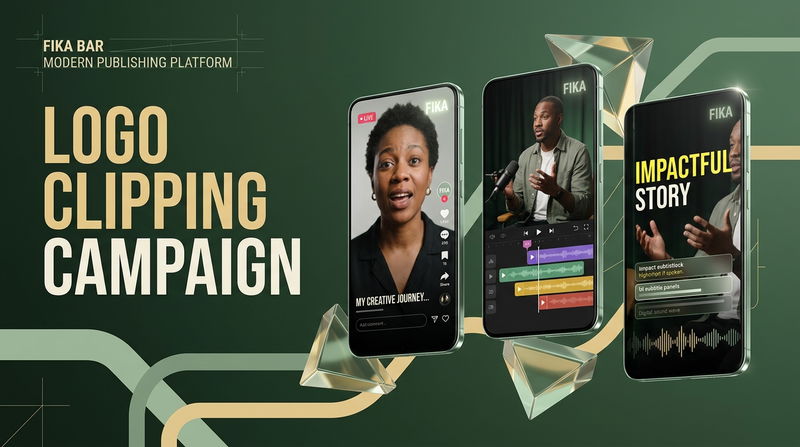

Watching your brand marketing budget evaporate into high-cost social feed ads that deliver almost zero lasting customer recognition is one of the most frustrating experiences facing modern business founders. You spend months working with design teams to craft a balanced vector mark, select clean corporate typography, and define an elegant color palette. Once the assets are ready, your team purchases sponsored ad slots across social platforms, only to watch cost-per-click numbers rise every month while actual brand recall remains flat. Mobile users have developed subconscious ad blindness, flicking past corporate sponsor banners the instant they notice a commercial sales pitch on their screens.
The breakdown is not the visual quality of your emblem or the utility of the products you build. The failure happens because interruptive advertising runs completely counter to modern mobile viewing habits. People do not open their favorite mobile apps to sit through corporate sales pitches. They browse to find entertainment, absorb practical knowledge, and connect with relatable human stories. When an overt commercial interruption cuts across their screen, the sudden disruption triggers immediate annoyance rather than curiosity. Real, compounding brand familiarity does not happen by forcing audiences to watch a corporate commercial. It happens through ambient recognition, when a prospective buyer repeatedly sees a clean, tasteful emblem resting naturally inside engaging creator content they already choose to watch. Overcoming this visibility hurdle requires launching a structured Logo Clipping Campaign to systematically position your visual identity across high-retention creator video cutdowns, turning daily mobile browsing into a compounding discovery engine.
Obstacle 1: The Paid Ad Rejection Reflex
The initial obstacle every modern brand encounters is the immediate drop in user engagement when launching standard social media advertisements. Marketing teams assemble polished product videos, add commercial voiceovers, and pay platforms to place those videos inside user feeds. Within fractions of a second, the mobile viewer notices the sponsored label, detects the corporate tone, and swipes upward. Because advertising networks bill companies based on impressions rather than real viewer attention, marketing budgets get drained on superficial glances that leave zero lasting mark on consumer memory.
Before the Fix: The brand produces polished corporate commercials featuring company staff or scripted customer testimonials. Viewers recognize the sales intent instantly and swipe away in under two seconds, driving up customer acquisition costs.
After the Fix: The brand embeds a discreet, semi-translucent logo watermark into the corner safe zone of organic, high-retention creator discussions, educational tutorials, and inspiring stories. The audience watches the full video because the content provides real value, absorbing the brand emblem subconsciously while enjoying the narrative.
Rapid-Fire Execution Advice: Stop treating video feeds like television commercial slots. Align your visual mark with content people already love watching. When your emblem appears alongside compelling storytelling, viewers associate your company with authority and insight rather than sales disruption.
Obstacle 2: The Interface Obstruction Trap
The second hurdle centers on the technical friction of displaying a visual mark across modern smartphone displays. Mobile video applications display native interactive controls, including profile avatars, like counters, share triggers, comment trays, and sliding caption text along the edges of the display. When an unguided marketing team places a logo into a video without testing mobile safe margins, native interface buttons end up covering half the emblem. Silent browsers cannot decipher the obstructed graphic, turning a branding opportunity into visual clutter.
Before the Fix: The design team exports videos with logos placed in arbitrary corners or stretched across the bottom margin. On mobile screens, platform buttons cover the text, making the mark illegible and looking unpolished.
After the Fix: The production pipeline calibrates every video asset using universal mobile safe-zone templates. The brand watermark is positioned within certified upper safe zones, scaled to roughly eight to ten percent of total display width, and rendered with subtle drop shadows to ensure clear contrast against variable backgrounds.
Rapid-Fire Execution Advice: Always review video assets directly on real smartphone screens before publishing. If a native platform button touches your logo boundary, adjust your template margins inward. Clean spacing creates an editorial feel that viewers instinctively respect.
Obstacle 3: The Single-Channel Reach Plateau
The third challenge occurs when an organization shares video assets exclusively from its own corporate profile. Corporate social media profiles face severe organic reach restrictions because platform recommendation algorithms prioritize human creators over company accounts. If a brand only uploads clips to its official company page, the content reaches only the tiny circle of users who already follow the account. Publishing ten videos a week from an isolated company profile creates internal fatigue without generating fresh audience discovery.
Before the Fix: The marketing department confines all video publishing to the official corporate handle. View counts remain stuck in the low hundreds, and the visual mark never reaches new prospective buyers.
After the Fix: The campaign distributes branded video cutdowns across a decentralized network of independent creator profiles and niche curation accounts. This multi-account release schedule introduces the emblem to dozens of distinct audience segments simultaneously, generating compounding reach.
Rapid-Fire Execution Advice: Decentralize your distribution footprint. Sponsoring and supplying ready-to-post, high-value vertical cutdowns to multiple creator channels trains recommendation engines to circulate your brand mark across diverse community subcultures all month long.
Traditional Video Advertising vs. Coordinated Logo Syndication
Viewer Experience
Traditional Video Advertising: Experienced as an unwanted commercial interruption that mobile users swipe past automatically.
Coordinated Logo Syndication: Experienced as organic, high-value entertainment and education that viewers willingly consume from start to finish.
Asset Lifespan
Traditional Video Advertising: Vanishes completely the exact moment your daily paid advertising budget is exhausted.
Coordinated Logo Syndication: Stays live permanently across creator archives, generating compounding long-tail brand impressions over time.
Audience Trust Factor
Traditional Video Advertising: Generates immediate skepticism because the audience knows the company paid to interrupt their screen.
Coordinated Logo Syndication: Builds subconscious authority by associating your emblem with high-value, unscripted human insights and educational discussions.
Interface Safe-Zone Precision
Traditional Video Advertising: Frequently suffers from layout issues where platform action buttons block important graphics or text.
Coordinated Logo Syndication: Engineered with calibrated safe-zone positioning so your watermark remains completely visible on all mobile devices.
Resource Allocation
Traditional Video Advertising: Requires continuous cash infusions to maintain visibility as platform auction costs steadily rise.
Coordinated Logo Syndication: Delivers sustainable organic visibility across decentralized channels at a predictable operating cost.
Practical Execution: Frequently Asked Questions
How does ambient logo placement translate into measurable business conversions without direct click links?
While direct response ads focus on immediate, expensive impulse clicks, ambient logo syndication builds deep top-of-funnel brand recognition. By placing your visual identity across millions of organic video views each month, your company establishes effortless familiarity. When prospective buyers eventually require your service, your brand is already the trusted household name they search for directly in their web browser, resulting in higher organic search traffic, lower customer acquisition costs, and stronger inbound conversion rates.
What styles of video content yield the highest retention for brand watermarking?
The most effective videos feature self-contained life lessons, counter-intuitive business breakdowns, inspiring athletic feats, or practical productivity frameworks. The clip must deliver an intellectual or emotional payoff within forty to sixty seconds, ensuring viewers stay engaged while your logo watermark remains anchored in their visual field.
Will viewers find the presence of a corner brand watermark distracting?
No. When engineered with professional graphic restraint, semi-translucent styling, and precise safe-zone placement, a brand watermark looks just like a network broadcast bug on television. Mobile audiences are completely accustomed to seeing watermarks on high-production media, and they perceive the emblem as a mark of editorial quality rather than an aggressive commercial interruption.
The Path Forward for Modern Brand Building
Building lasting brand authority in digital channels does not require spending millions on forgotten banner ads or fighting rising auction costs on ad networks. It comes down to meeting prospective customers where their attention already lives. When your brand identity is syndicated consistently across high-retention vertical video cutdowns, your company builds lasting recognition and authority that compounds steadily over time.
What has been your biggest obstacle when trying to make your brand visible on mobile video platforms this year? Are you struggling more with high ad costs on paid channels, or finding ways to get your visual identity into organic creator feeds? Share your perspective in the comments below, and let us explore practical solutions for your brand rollout.

Comments
No comments yet. Be the first to comment!