
The Smart Streamer’s Guide to Turning Live Content Into Growth
How streamers can use short-form clips to reach new viewers long after the stream ends.
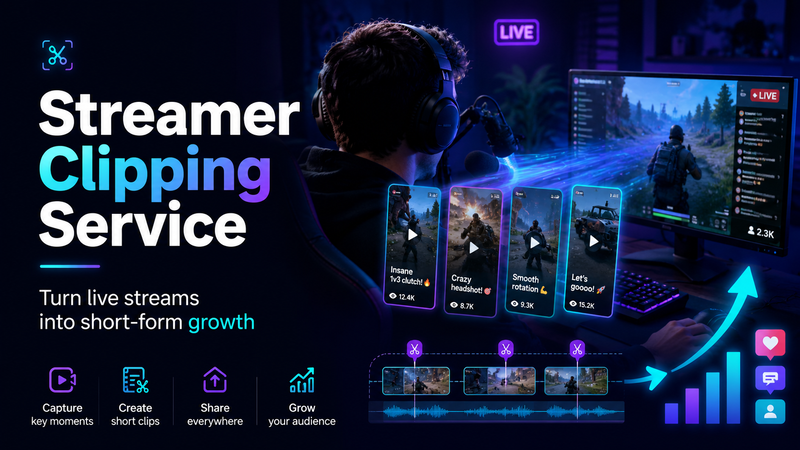

Streaming is one of the few content formats where the best moments are often unplanned. A streamer may go live with a rough idea of what they want to play or talk about, but the moments that people remember usually happen naturally. Chat says something strange, the game breaks at the worst possible time, a clutch play happens out of nowhere, or the streamer reacts in a way that feels more entertaining than anything they could have scripted.
That is what makes live content powerful. It feels real because it is happening in the moment.
The problem is that these moments are easy to lose. A stream can run for three hours, five hours, or even longer. Somewhere inside that recording may be ten moments worth posting, but most new viewers will never search through the full replay to find them. Even loyal fans may only remember the highlights if someone clips and shares them.
This is why streamers need to stop thinking of clips as bonus content. Clips are one of the most practical ways to turn live content into discovery content.
A proper Streamer Clipping Service helps take long streams and turn the best parts into short-form clips that can be shared on platforms like TikTok, YouTube Shorts, Instagram Reels, X, Discord, and Reddit.
The live stream may be the main event, but clips are often what introduce the creator to people who were never there when it happened.
Why Streaming Alone Is Not Enough for Growth
Going live consistently is important, but streaming alone can be a slow way to grow. A live stream mostly reaches people who already know the creator, follow the channel, or happen to find the stream while browsing. That creates a visibility problem.
A streamer may be talented, funny, skilled, or genuinely useful, but if the only way to experience their content is by catching them live, many potential viewers will never see the best parts.
The full VOD does not solve this problem by itself. Long replays are useful for existing fans, but they are not always useful for discovery. A new viewer who has no connection to the streamer is unlikely to open a long recording and wait for something interesting to happen. They need a smaller sample first.
A short clip gives them that sample.
A thirty-second moment can show personality faster than a full channel description. A good gaming clip can show skill without asking for a long watch time. A funny chat exchange can reveal the tone of the community. A quick explanation can make the creator seem helpful and worth following.
That is the real value of clipping. It turns a stream into something that can keep working after the broadcast ends.
Clips Help People Understand the Streamer Faster
Most viewers decide quickly whether they are interested in a creator. They may not know all the details yet, but they can sense whether someone is funny, sharp, calm, chaotic, skilled, relatable, or worth hearing again.
Clips help speed up that first impression.
For streamers, this matters because personality is often the biggest growth driver. Even in gaming, people do not only follow because someone is good. They follow because the streamer has a specific energy. Maybe they explain things clearly. Maybe they rage in a funny way. Maybe they have great timing with chat. Maybe they are relaxed and easy to watch. Maybe their community feels like a place people want to join.
A good clip should make that energy visible.
This is why random highlights are not always enough. A clip that only shows gameplay may not say much about the creator unless the moment is genuinely impressive. A clip that only shows a reaction may not work unless the viewer understands what caused it. A clip that only includes a joke may fall flat if the setup is missing.
The job of clipping is to package the moment so a stranger can understand it quickly.
Good Clipping Starts With Choosing the Right Moments
Editing matters, but clip selection matters even more. A weak moment with fancy captions is still a weak moment. A strong moment with a clean edit can do far more because the core of the content already works.
The best stream clips usually have a clear reason to exist. They do not feel like random pieces of a longer video. They feel like complete moments.
A good stream clip might include:
A funny reaction that shows the streamer’s personality
A clean play where the stakes are easy to understand
A chat message that sets up a strong response
A mistake that becomes entertaining because of timing
A short explanation that teaches something useful
A strong opinion that invites comments
A community moment that shows what the stream feels like
A surprising turn where the situation changes quickly
The clip does not need to be loud or overproduced. It just needs to make sense.
For example, a streamer winning a match is not always enough. The stronger clip may show that they were nearly out of options before the win. A streamer laughing at chat is not always enough. The stronger clip may show the chat message that caused the laugh. A streamer giving advice is not always enough. The stronger clip may start with the problem before showing the answer.
This is what separates useful clipping from basic cutting.
The Viewer Needs Context, but Not Too Much
One of the hardest parts of clipping live streams is deciding how much context to include. If there is too little context, the viewer feels lost. If there is too much, the clip becomes slow.
This balance is especially important for streamers because live content often depends on what happened earlier. The streamer may be reacting to a chat message, a previous mistake, a running joke, or a situation in the game that is obvious to regular viewers but unclear to everyone else.
A good clip gives the viewer just enough information to care.
That might mean showing the chat message before the response. It might mean including two seconds of gameplay before the reaction. It might mean keeping the facecam visible because the expression is what makes the moment work. It might mean using captions so the point is clear even without sound.
The goal is not to explain everything. The goal is to make the moment easy to enter.
Different Platforms Need Different Clip Packaging
One mistake many streamers make is posting the same clip everywhere with the same caption and expecting the same result. Sometimes that can work, but different platforms often reward different things.
TikTok may respond well to fast personality clips, funny reactions, chaos, or surprising turns. YouTube Shorts may work better when the clip has a clearer topic, stronger replay value, or a more obvious payoff. Instagram Reels may be better for polished creator moments, relatable reactions, and personality-led content. X can work well for strong opinions, funny short clips, gaming takes, or conversation starters. Discord is better for community moments and clips that regular viewers will understand.
The raw moment can stay the same, but the packaging may need to change.
That could mean changing the opening line, adjusting the caption, cropping the clip differently, including or removing chat, or choosing a slightly different length. A good clipping system does not treat every platform as identical. It understands that each platform has its own viewing habits.
Streamer Content Should Not Feel Overedited
There is a common temptation to make every short-form clip look loud. Big captions, constant zooms, flashing effects, aggressive cuts, and sound effects can make a clip feel busy, but busy is not always better.
Streamer content often works because it feels natural. Viewers like the creator’s timing, reactions, voice, and relationship with chat. If the edit gets in the way of that, the clip may lose what made the moment good in the first place.
Good editing supports the moment. It does not try to replace it.
Sometimes a clip only needs clean trimming, captions, and a proper start point. Sometimes it needs a little extra context. Sometimes it needs tighter pacing. Sometimes the best decision is to leave the moment alone and let the streamer’s personality carry it.
This is why clipping should not be treated as a one-size-fits-all template. A chaotic variety streamer may need a different style from a calm educational streamer. A competitive gamer may need a cleaner edit than a reaction-based creator. A VTuber may need clips that preserve character energy and community jokes.
The edit should fit the streamer.
A Simple Weekly Clipping System for Streamers
A good clipping system does not need to be complicated. The most important thing is that it happens consistently.
Streamers can start by treating each stream as a source of possible content. After the stream, the VOD can be reviewed and marked for moments that have humor, value, skill, tension, emotion, or personality. Those moments can then be sorted by platform and purpose.
Discovery Clips, Community Clips, and Authority Clips
Not every clip needs to serve the same purpose. A streamer can think about clips in three main categories.
Discovery clips are for people who do not know the creator yet. These clips need to be clear, easy to understand, and interesting quickly. They may show a funny reaction, a clean play, a surprising fail, or a strong opinion.
Community clips are for people who already follow the stream. These may include inside jokes, recurring bits, familiar chat moments, or stream lore. They may not always perform well with strangers, but they make the existing audience feel more connected.
Authority clips show that the streamer knows something useful. These work especially well for creators who teach, explain, review, coach, analyze, or break down gameplay. A quick lesson can make a viewer trust the streamer before they ever join a live session.
A balanced clipping strategy includes all three. Discovery brings new people in. Community keeps regular viewers engaged. Authority builds trust.
Why Outsourcing Clipping Can Be a Smart Move
Many streamers can clip their own content, but that does not mean they should always handle it themselves. Clipping takes time, and time is already one of the biggest challenges for creators.
A streamer has to plan the live session, go live, keep the energy steady, talk to chat, manage the community, improve their setup, post on social platforms, respond to messages, and think about future content. Adding several hours of VOD review and editing every week can become difficult.
Outsourcing clipping can help because it lets the streamer focus on creating the moments while someone else turns those moments into content assets.
The benefit is not only saving time. It is also getting an outside perspective. A streamer may be too close to their own content to judge what will work for new viewers. An editor or clipping team can watch with fresh eyes and choose moments based on audience potential, not only personal preference.
That perspective can make the difference between posting clips that only make sense to regulars and posting clips that actually help the channel grow.
What to Look For in a Streamer Clipping Service
A good clipping service should understand streaming culture, not just editing software. It should know how to handle chat context, facecam reactions, gaming footage, platform formats, captions, and pacing.
It should also understand the streamer’s goals. Some creators want more live viewers. Some want social growth. Some want stronger YouTube discovery. Some want better content for sponsors. Some want to build a stronger community around their stream.
The service should be able to explain why a clip was chosen and where it should be posted. If the answer is always “because it looked cool,” the process may not be strategic enough.
A good service should help answer questions like:
Does this clip make sense to someone new?
Does the opening create enough interest?
Is the clip too long for the payoff?
Should the chat message be visible?
Does this clip show personality, skill, or value?
Which platform is the best fit for this moment?
Does the edit still feel natural to the streamer’s style?
These questions matter because clipping is not only about volume. It is about useful visibility.
Clipping Gives Streams a Longer Life
The biggest value of clipping is that it gives a live stream more life after the broadcast ends. Instead of disappearing into a VOD library, the best moments continue to move across platforms.
A good clip can introduce the streamer to someone who would never have watched the full replay. It can give existing fans something to share. It can remind followers to catch the next stream. It can show brands that the creator has an active content presence beyond live sessions.
Over time, clips also become a learning tool. They show which moments people respond to most. If funny chat interactions perform well, the streamer may lean into community banter. If educational clips get saved, the streamer may create more teaching moments. If gameplay highlights bring followers, the streamer may package more competitive moments.
Clipping is not just a way to reuse content. It is a way to understand what people actually care about.
Final Thoughts
Streaming already takes real effort. The problem is that too much of that effort disappears when the stream ends. A great moment inside a long VOD is only valuable if someone can find it.
Clipping gives those moments a better chance.
It turns live streams into smaller, sharper pieces of content that can reach people on the platforms where discovery happens every day. It helps streamers stay visible between live sessions, grow beyond their current audience, and get more value from content they are already creating.
For streamers who are serious about growth, clipping should not be treated as an afterthought. It should be part of the content system from the start.
The stream creates the moment. The clip helps the right people find it.

Comments
No comments yet. Be the first to comment!