
Why More Brands Are Relying on Short-Form Video to Stay Visible
A closer look at how a short form video agency helps brands turn podcasts, webinars, interviews, and long-form content into steady reach
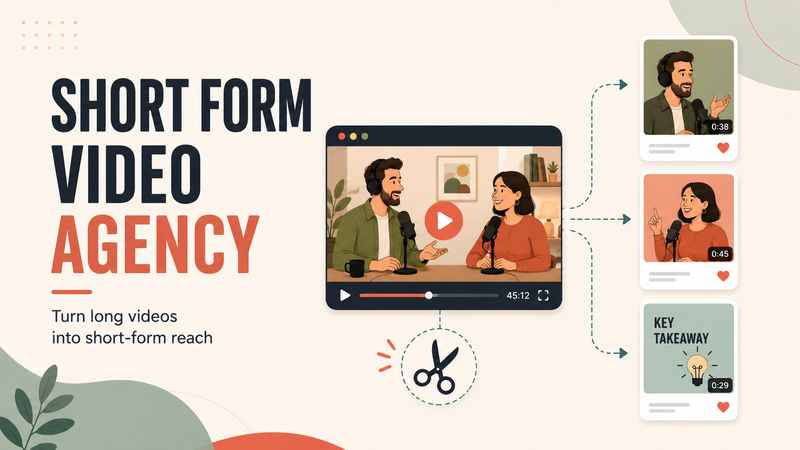

Most brands are not struggling because they have nothing to say. They are struggling because too much of what they already have never gets seen in the first place.
A company records a useful podcast. A founder shares strong insights during an interview. A webinar covers real customer pain points. A team spends time building educational content, but most of it stays buried inside long videos that only a small percentage of people will ever fully watch. The ideas are there. The expertise is there. The effort is definitely there. What is often missing is a practical system for turning those longer assets into content that fits the way people actually consume information today.
That is where short-form video has quietly become one of the most useful tools in modern marketing.
It is not just a trend for creators chasing views. It is a working format for brands that want more visibility, more reach, and more value from the content they are already producing. Short clips can travel across platforms far more easily than a full-length webinar or a 50-minute podcast episode. They create more touchpoints with the audience, give useful ideas a longer shelf life, and make it easier for a brand to stay visible without reinventing the wheel every day.
This is also why more businesses are choosing to work with a Short Form Video Agency instead of trying to handle the entire process on their own.
Short-form video is no longer optional for attention
There was a time when brands could treat short-form video as a side experiment. A few clips here and there felt enough. That time has mostly passed.
Attention now moves through feeds. People discover ideas through Instagram Reels, YouTube Shorts, LinkedIn clips, TikTok videos, podcast snippets, and short educational content that meets them in the middle of their day. Most people are not sitting down and committing forty minutes to a company’s full video unless they already know why it matters. Short-form content helps bridge that gap.
It gives people a lighter entry point.
A single clip can introduce a founder’s perspective. Another can explain a common mistake in the market. Another can turn a webinar insight into a useful takeaway. A good short-form strategy creates repeated chances for the audience to notice the brand and begin to understand what it stands for.
That repeated exposure matters because trust rarely comes from one interaction. It builds gradually.
What a short form video agency actually does
At a surface level, the role sounds simple. Take long-form content and cut it into short clips. In reality, the job is more layered than that.
A strong short form video agency does not just trim footage. It helps shape content into something clearer, more watchable, and more useful for the audience. The editing matters, of course, but the real value comes from understanding which moments deserve attention and how those moments should be presented.
A good agency often helps with:
Reviewing long-form source material
Identifying strong moments with value or emotional pull
Improving hooks and openings
Tightening pacing so clips hold attention
Adding captions for better watchability
Formatting content for different platforms
Creating a publishing rhythm around existing content
Helping brands get more mileage from every recording
Learning from performance and improving future clips
That last point is important. Short-form content should not be treated like random output. Over time, brands learn which angles pull people in, which speakers resonate more, which topics drive comments, and which types of clips generate trust rather than just views.
When done properly, short-form video becomes less of a creative gamble and more of a repeatable content system.
The real problem is rarely content volume
One common mistake is assuming a brand needs to create more from scratch. In many cases, that is not true. The bigger issue is that the content already exists, but it is underused.
Think about how much material most businesses are sitting on:
Podcasts
Webinars
Founder interviews
Product demos
Case study discussions
Sales conversations
Event recordings
Internal training sessions
Educational explainers
Client success stories
Each of those assets can hold multiple short-form opportunities.
A one-hour discussion can contain ten or fifteen strong moments if someone knows what to look for. A founder answering a direct question can become a clean thought leadership clip. A podcast guest sharing a sharp opinion can become a high-performing social post. A webinar lesson can be turned into a short educational series. The content is often hiding in plain sight.
This is why short-form video is not only about visibility. It is also about efficiency.
Why in-house teams often struggle with consistency
It is easy to underestimate the work involved because the final output is short. A 30-second or 45-second clip looks simple. What people do not see is everything that sits behind it.
Someone needs to review the original material. Someone has to choose the right moment. Someone needs to decide if the clip makes sense on its own or whether it needs context. Then comes editing, captioning, formatting, polishing, posting, and doing it all again next week.
That workflow can become heavy very quickly.
For in-house teams, the challenge is usually not talent. It is bandwidth. A marketer may already be managing campaigns. A founder may not have time to review content all day. An editor may be good at cutting footage but not at spotting the most strategically useful moments. Over time, the short-form plan becomes inconsistent. The brand posts heavily for a week, disappears for two weeks, then tries to restart.
That stop-start rhythm is one of the biggest reasons brands fail to get traction.
Consistency does not mean flooding the internet with low-value clips. It means building a process that allows good content to be published regularly enough to matter.
Good short-form video starts with substance
Not every short clip needs flashy effects or a hyper-edited style. In fact, many premium brands are better off avoiding that look.
The strongest short-form videos usually begin with a useful idea. The edit supports the idea, but it does not replace it. If the source material is weak, the clip will struggle no matter how many captions or transitions get added.
What tends to work best is substance paired with clarity.
That could look like:
A founder explaining a hard truth about the industry
A speaker answering a question customers ask all the time
A team member breaking down a common mistake
A podcast guest sharing a practical insight
A behind-the-scenes moment that reveals how the brand thinks
A concise clip that turns expertise into something easy to follow
The best short-form content often feels natural rather than forced. It respects the viewer’s time, gets to the point, and offers something worth remembering.
Why brands are increasingly hiring specialists
Not every brand needs a massive in-house content team. Many simply need a better repurposing workflow.
That is where a short form video agency can make a real difference. It allows the business to keep producing or recording the content it already knows how to create while handing the clipping, shaping, editing, and packaging to specialists who focus on that process every day.
For brands, that can lead to several practical benefits:
1. More visibility without more filming
A single podcast or interview can become multiple assets. This means the brand can show up more often without needing to record fresh material every day.
2. Better use of existing content
Instead of letting a webinar sit on a landing page forever, the best ideas from it can be repackaged and redistributed.
3. A stronger founder or expert presence
Many companies have smart people inside them, but the market rarely sees that intelligence clearly. Short clips make expertise more accessible.
4. A smoother content engine
Short-form content works best when it becomes part of a repeatable process, not a last-minute add-on.
What to look for in a short form video partner
Not all agencies are built the same. Some focus mainly on execution. Others bring stronger strategic thinking around audience behavior, messaging, and platform fit.
Before choosing a partner, it helps to look at a few things:
Can they identify good moments on their own?
Do they understand how different platforms behave?
Is their editing style aligned with the brand?
Can they preserve tone and voice instead of making everything feel generic?
Do they understand the difference between reach-based clips and trust-building clips?
Can they maintain consistency over time?
Do they think in terms of systems, not just individual edits?
A strong partner should not feel like a clip factory. It should feel like a support system for the brand’s visibility.
Short-form video is part of the wider buyer journey
People often treat short-form content as top-of-funnel material only. It does work well for awareness, but its value does not end there.
Short clips can help at multiple stages of the customer journey. They can build familiarity, introduce the brand’s point of view, handle objections, highlight expertise, and give potential buyers small signs that this is a company worth paying attention to.
A few ways short-form clips can support that journey:
Introduce a service or offer in a simple way
Show how a founder thinks about the market
Break down common misconceptions
Share customer wins or proof points
Make long-form educational content more accessible
Keep the brand present in the audience’s feed over time
These repeated touchpoints are often what move a brand from “never heard of them” to “I keep seeing them everywhere” and eventually to “I should probably check them out.”
That is a powerful shift.
The brands that win will be the ones that show up consistently
Short-form video is not magic. It will not rescue a weak message or turn every clip into a viral hit. That is not the point.
Its real value is more practical than that. It helps brands get more use out of the content they already have. It helps them stay visible. It creates more ways for the audience to encounter their ideas. It turns long-form effort into smaller, more flexible assets that fit modern attention patterns.
That is why the rise of the short form video agency makes sense.
Brands are no longer asking whether short-form content matters. They are asking how to build a process around it without stretching their internal teams too thin. For many, the best answer is not creating more content from scratch. It is building a smarter system around the content they already produce.
And in a market where attention is crowded and consistency is hard to maintain, that kind of system can become one of the most useful assets a brand has.

Comments
No comments yet. Be the first to comment!