
Video Clipping Services UK: A Smarter Way to Reuse Every Recording
How UK brands can turn podcasts, webinars, interviews, demos, and event recordings into short clips that create repeat visibility.

Most useful videos do not fail because the idea is weak. They fail because the best parts are too hard to find. A founder might explain the company’s point of view halfway through a podcast. A customer might describe the real result near the end of a case study call. A webinar might answer five valuable buyer questions, but those answers are buried inside a recording that only a small group of people will ever watch in full.
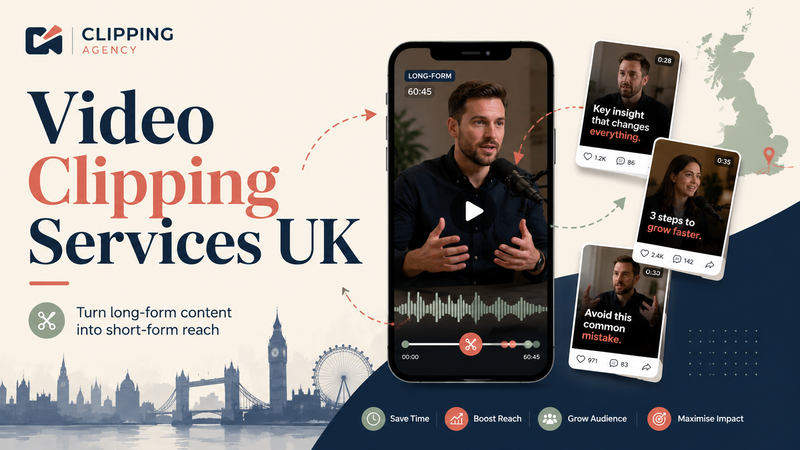
That is why Video Clipping Services UK are becoming more useful for brands that already create long-form content but want more reach from the work they have already done. Instead of treating one long recording as one post, one upload, or one link in a newsletter, a clipping process turns the strongest moments into short videos that can be used across LinkedIn, YouTube Shorts, Instagram Reels, TikTok, email, website pages, and sales follow-ups.
For UK businesses, this is especially practical because many teams are already recording valuable material. Agencies host webinars. SaaS teams record demos. Consultants run workshops. Creators record podcasts. Founders speak at events. Coaches record calls and explainers. The problem is not always a lack of content. The problem is that the useful moments are not being packaged in a way that people can discover quickly.
Why video clipping matters now
Attention is harder to earn than it used to be. People are busy, feeds move quickly, and most viewers are not willing to give a new brand 40 minutes of their time. That does not mean long-form content is dead. It means long-form content needs better distribution.
A short clip gives someone a small entry point into the brand’s thinking. It can answer one question, challenge one belief, explain one mistake, or show one useful insight. If the clip is clear and relevant, it can make a cold viewer pause for a moment. Over time, several clips can make the brand more familiar.
That familiarity matters. People rarely trust a business from one piece of content. They trust it after repeated exposure to useful ideas, consistent points of view, and proof that the team understands the problem. Clipping helps create those repeat touchpoints without forcing the brand to record new videos every day.
What video clipping actually involves
Video clipping is not the same as cutting a long video into random short sections. A proper clipping process takes the full recording and finds the moments that can stand alone. The clip needs to make sense to someone who has not watched the full video. It also needs to hold attention quickly, because short-form platforms do not give brands much room to warm up.
A good clipping workflow usually includes:
Watching or reviewing the full recording
Identifying moments with clear standalone value
Removing filler, pauses, and repeated phrases
Keeping enough context so the viewer understands the point
Adding captions that are readable on mobile
Formatting clips for each platform
Creating simple hooks or post captions
Organising clips by topic, speaker, or funnel stage
Reviewing performance to improve future clip selection
The goal is not just to produce more files. The goal is to turn strong ideas into usable content that the audience can understand quickly.
Why UK brands benefit from this approach
Many UK businesses are in a difficult content position. They need to stay visible, but they do not have endless time to film. A small team may be handling sales, delivery, operations, client work, hiring, and marketing at the same time. Asking that team to produce fresh video content every day is not realistic.
Clipping makes the process more manageable because it starts with content that already exists. A single useful recording can become several short clips, each with a different purpose.
For example:
A webinar can become educational LinkedIn clips
A podcast can become YouTube Shorts and Reels
A founder interview can become thought leadership posts
A customer call can become proof-based snippets
A product demo can become short feature explainers
An event talk can become weeks of social content
A training session can become internal or customer education clips
This gives the brand more chances to be seen without starting from zero every time.
What makes a clip strong
A strong clip is not always the loudest moment in the video. It is the moment that gives the viewer a clear reason to keep watching. Sometimes that is a practical tip. Sometimes it is a direct answer to a question. Sometimes it is a sharp opinion, a story, or a simple explanation that makes a complicated topic easier to understand.
A good clip usually has:
One clear idea
A strong opening line
Enough context for new viewers
Natural delivery from the speaker
A useful takeaway
Clean sound
Readable captions
A length that fits the platform
A reason for someone to save, share, comment, or click
The best clips feel complete. They do not feel like a random piece of a longer conversation. A viewer should understand the point without needing to ask what came before it.
Where clipped videos can be used
One advantage of clipping is that the same source content can support several channels. The clip may need small changes for each platform, but the core idea can often travel further than the original long video.
UK brands can use clipped videos on:
LinkedIn for B2B education, founder insights, and client lessons
YouTube Shorts for searchable short-form discovery
Instagram Reels for brand presence, culture, and quick advice
TikTok for direct hooks and relatable problem-led content
Email newsletters to make written updates more engaging
Website pages to add proof, context, or personality
Sales follow-ups to answer questions in a more human way
Paid social campaigns to test messages before scaling
LinkedIn is often especially useful for UK agencies, consultants, SaaS companies, and professional service businesses because the platform rewards clear thinking and credible expert content. A well-chosen clip from a founder, strategist, consultant, or customer can often communicate trust faster than a written post alone.
Why editing style should fit the brand
Many brands think short-form video needs to be heavily edited to work. Fast cuts, flashing captions, zooms, sound effects, and busy visuals may suit some creator accounts, but they do not suit every business. A professional brand should not lose its credibility just to look active on social media.
For many UK businesses, the best clipping style is clean, clear, and confident. The edit should remove friction, but it should not make the speaker feel unnatural. Captions should be easy to read. The first few seconds should get to the point. Branding should be present, but not so heavy that it distracts from the message.
A strong editing style usually focuses on:
Good pacing
Clear framing
Clean audio
Mobile-friendly captions
A strong first sentence
Natural speaker rhythm
Simple visual branding
Correct sizing for each platform
The edit should support the idea. It should not become the main thing the viewer notices.
How clipping supports trust and sales
Video clipping is often seen as a visibility tool, but it can also support trust and sales. Buyers want more than polished claims. They want to hear how a team thinks, how it explains problems, what it knows, and whether it sounds credible.
A short clip can help with that. A founder can explain a point of view. A consultant can answer a common question. A customer can describe an outcome. A product specialist can show one useful feature. These moments make the brand feel more human and easier to understand.
Clips can also be useful inside the sales process. Instead of sending a prospect a full webinar, a team can send a short clip that answers one specific objection. That might be about pricing, delivery, onboarding, timelines, results, or how the service works. A relevant clip can make the conversation easier because the prospect gets a clear answer without needing to search through a long recording.
Mistakes that weaken clipping campaigns
Video clipping only works well when there is judgement behind it. More clips do not automatically mean better marketing. A folder of average clips can create noise without improving trust or visibility.
Common mistakes include:
Choosing clips that need too much missing context
Starting clips too slowly
Making every clip sound like a sales pitch
Using captions that are too small or too crowded
Posting the same version on every platform
Over-editing serious business content
Ignoring comments, saves, retention, and watch time
Picking clips based only on what the internal team likes
Posting for two weeks and then stopping
Failing to connect clips to a wider content strategy
The best clipping campaigns are built around the audience. They focus on the questions, problems, beliefs, and decisions that matter to the people the brand wants to reach.
What to look for in a clipping partner
A good clipping partner should understand more than editing software. The real skill is knowing which moments are worth using and how to shape them for the right audience. Anyone can cut a video. Not everyone can choose the clip that makes the brand look clearer, sharper, and more useful.
UK brands should look for a partner that understands:
Long-form content review
Clip selection
Hooks and opening lines
Caption readability
Platform-specific formatting
Clean editing for professional brands
B2B, creator, or service-led content
Consistent delivery
Feedback and revision workflows
How clips support wider marketing goals
The right partner should help the brand get more value from existing content, not just create more things to post.
Final thoughts
Video clipping helps UK brands make better use of the content they already create. A long recording may contain several strong ideas, but those ideas need to be easier to find, easier to watch, and easier to share. Short clips make that possible.
When done properly, clipping does more than fill a content calendar. It helps the brand show up repeatedly with useful ideas, build familiarity with the right audience, support sales conversations, and stretch the value of every recording.
For brands that already invest time into podcasts, webinars, interviews, demos, and event content, clipping is a practical next step. It turns long-form effort into short-form visibility, and it gives the best ideas a better chance to travel.

Comments
No comments yet. Be the first to comment!